This article is being expanded for more depth. Check back soon!

Advanced Cardiac Life Support ACLS Algorithms Drugs and Clinical Management Guide
Author: Medical Editorial Team – Board-certified physicians with 10+ years in emergency medicine. Learn more.

Illustration of Advanced Cardiac Life Support ACLS Algorithms Drugs and Clinical Management Guide symptoms

Medical Disclaimer: This is educational content only, not medical advice. Consult a licensed healthcare provider for diagnosis/treatment. Information based on sources like WHO/CDC guidelines (last reviewed: 2026-02-13).

About the Author: Dr. Dinesh, MBBS, is a qualified medical doctor with over [2 years – add your experience] of experience in general medicine As the owner and lead content creator of LearnWithTest.pro, Dr. Dinesh ensures all articles are based on evidence-based guidelines from sources like WHO, CDC, and peer-reviewed journals. This content is for educational purposes only and not a substitute for professional medical advice.

Contact Details: For inquiries or collaborations, reach out at:

All content is reviewed for accuracy and updated regularly (last review: January 10, 2026). We prioritize trustworthiness by citing reliable sources and adhering to medical ethics.

Frequently Asked Questions

What is Advanced Cardiac Life Support ACLS?

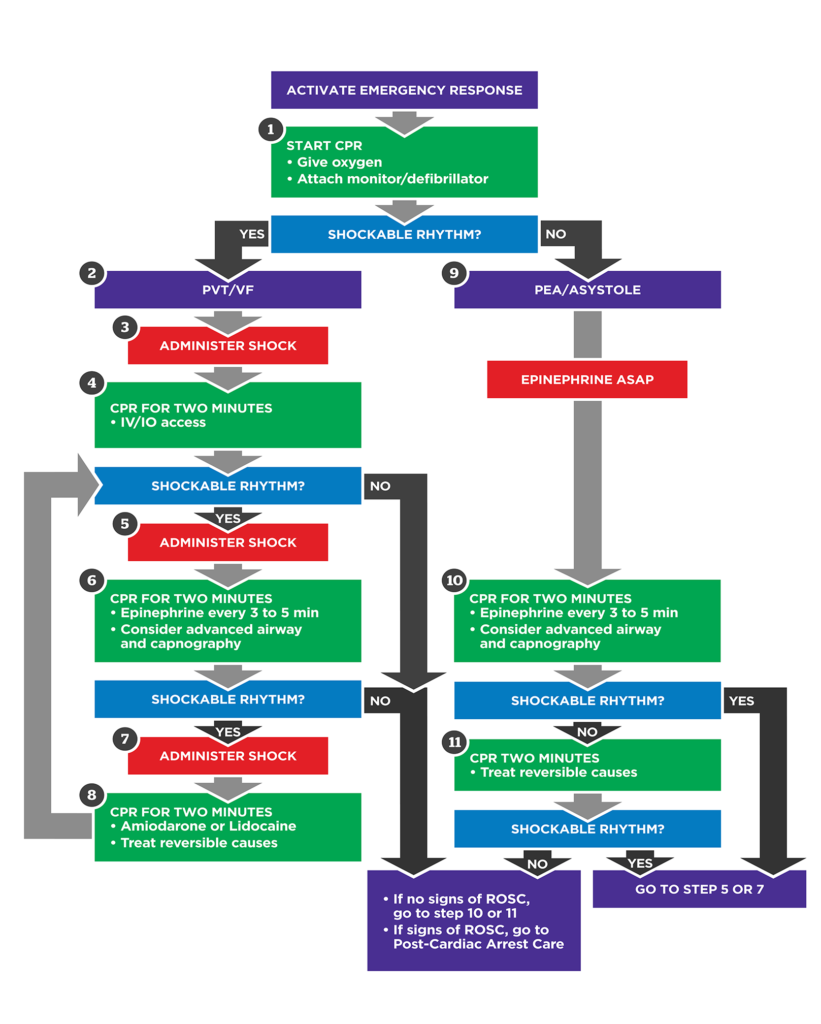
Advanced Cardiac Life Support ACLS is a set of evidence based clinical protocols used to manage adult cardiac arrest, peri arrest conditions, and life threatening cardiovascular emergencies using algorithms, medications, airway management, and team based resuscitation.

What are the main goals of ACLS?

The primary goals of ACLS are early return of spontaneous circulation, optimization of oxygenation and perfusion, identification and treatment of reversible causes, prevention of neurological injury, and improvement of survival outcomes.

Which cardiac arrest rhythms are shockable in ACLS?

The shockable rhythms in ACLS are ventricular fibrillation and pulseless ventricular tachycardia. These rhythms require immediate defibrillation.

Which cardiac arrest rhythms are non shockable?

Asystole and pulseless electrical activity are non shockable rhythms and are managed with high quality CPR, epinephrine, and treatment of reversible causes.

What is the role of epinephrine in ACLS?

Epinephrine is used in all cardiac arrest rhythms to increase coronary and cerebral perfusion pressure through vasoconstriction and is given every 3 to 5 minutes during resuscitation.

When is amiodarone indicated in ACLS?

Amiodarone is indicated for shock refractory ventricular fibrillation or pulseless ventricular tachycardia after defibrillation attempts and epinephrine administration.

What are the Hs and Ts in ACLS?

The Hs and Ts are reversible causes of cardiac arrest. Hs include hypoxia, hypovolemia, hydrogen ion excess acidosis, hypo or hyperkalemia, and hypothermia. Ts include tension pneumothorax, cardiac tamponade, toxins, coronary thrombosis, and pulmonary thrombosis.

How is high quality CPR defined in ACLS?

High quality CPR includes a compression rate of 100 to 120 per minute, depth of 5 to 6 cm, full chest recoil, minimal interruptions, and avoidance of excessive ventilation.

What is the role of capnography during ACLS?

Capnography is used to confirm advanced airway placement, monitor CPR quality, and detect return of spontaneous circulation. An end tidal CO2 less than 10 mmHg suggests poor CPR quality.

How is symptomatic bradycardia managed in ACLS?

Symptomatic bradycardia is initially treated with atropine. If atropine is ineffective, transcutaneous pacing or infusion of dopamine or epinephrine is recommended.

When is synchronized cardioversion used in ACLS?

Synchronized cardioversion is used for unstable tachyarrhythmias with a pulse, including unstable supraventricular tachycardia and unstable ventricular tachycardia.

What is targeted temperature management in ACLS?

Targeted temperature management involves maintaining body temperature between 32 and 36 degrees Celsius in comatose patients after return of spontaneous circulation to reduce neurological injury.

What is the importance of post cardiac arrest care?

Post cardiac arrest care focuses on optimizing oxygenation, maintaining adequate blood pressure, treating the underlying cause, preventing secondary brain injury, and improving long term survival.

When should termination of resuscitation be considered?

Termination of resuscitation may be considered when there is prolonged resuscitation with no return of spontaneous circulation, no identifiable reversible causes, persistently low end tidal CO2, and adherence to ACLS protocols.

Why is team communication important in ACLS?

Effective team communication using closed loop communication improves coordination, reduces errors, and enhances the efficiency and success of resuscitation efforts.

MCQ Test - Advanced Cardiac Life Support ACLS Algorithms Drugs and Clinical Management Guide

Progress:
0/15
Time: 00:00

1 A 67-year-old man collapses in the ICU. He is unresponsive, pulseless, and the monitor shows a chaotic irregular waveform. Defibrillation is delivered twice with ongoing CPR. What is the next most appropriate pharmacologic intervention?

Explanation:

In shockable cardiac arrest (VF or pulseless VT), epinephrine 1 mg IV/IO every 3–5 minutes is administered after defibrillation attempts.

2 A patient in cardiac arrest shows organized narrow QRS complexes at 60/min on the monitor but no palpable pulse. High-quality CPR is ongoing. Which is the most critical next step?

Explanation:

This scenario represents pulseless electrical activity. Management includes CPR, epinephrine, and aggressive treatment of reversible causes.

3 During ACLS, end-tidal CO₂ persistently remains below 8 mmHg despite correct compression rate and depth. What does this most strongly suggest?

Explanation:

ETCO₂ <10 mmHg indicates poor pulmonary blood flow and inadequate cardiac output during CPR.

4 A patient with refractory ventricular fibrillation has received three shocks, epinephrine, and amiodarone. Which intervention is now the highest priority?

Explanation:

In refractory VF, improving CPR quality and identifying reversible causes is critical to achieving ROSC.

5 A cardiac arrest patient has ultrasound findings of right ventricular collapse with a large pericardial effusion. What is the most appropriate immediate management?

Explanation:

Cardiac tamponade is a reversible cause of PEA arrest and requires immediate pericardial decompression.

6 A hypothermic patient (core temperature 29°C) presents with ventricular fibrillation. After one shock, VF persists. What is the correct ACLS approach?

Explanation:

In hypothermia, resuscitation should continue until rewarming. Defibrillation may be attempted but is often less effective until normothermia.

7 A patient achieves ROSC after prolonged resuscitation but remains comatose and hypotensive. What is the most appropriate next step?

Explanation:

Post–cardiac arrest care includes targeted temperature management and maintaining adequate perfusion to prevent secondary brain injury.

8 A patient with symptomatic bradycardia receives atropine with no response. Blood pressure remains low. What is the next recommended intervention?

Explanation:

Transcutaneous pacing is indicated when atropine fails in unstable bradycardia.

9 A wide-complex tachycardia at 180/min is present with hypotension and altered mental status. What is the immediate management?

Explanation:

Unstable tachycardia with a pulse requires immediate synchronized cardioversion.

10 A patient in cardiac arrest is suspected of massive pulmonary embolism. Which ACLS reversible cause does this represent?

Explanation:

Pulmonary embolism is categorized under thrombosis in the ACLS Hs and Ts.

11 After advanced airway placement during CPR, what is the correct ventilation strategy?

Explanation:

With an advanced airway, continuous compressions with 1 breath every 6 seconds is recommended.

12 A patient in asystole receives repeated defibrillation attempts. Why is this inappropriate?

Explanation:

Asystole is a non-shockable rhythm and should be managed with CPR, epinephrine, and correction of reversible causes.

13 A patient develops polymorphic VT with a prolonged QT interval during resuscitation. Which drug is most appropriate?

Explanation:

Magnesium sulfate is the treatment of choice for torsades de pointes.

14 During CPR, ETCO₂ suddenly increases from 14 mmHg to 42 mmHg. What does this most likely indicate?

Explanation:

A sudden sustained rise in ETCO₂ is a strong indicator of ROSC.

15 After 30 minutes of ACLS with no ROSC, no reversible causes identified, and persistent ETCO₂ <10 mmHg, what does this support?

Explanation:

Persistently low ETCO₂ with no ROSC despite optimal ACLS supports termination of resuscitation.

Test Results

0%
0/15
0
Correct Answers
0
Wrong Answers
00:00
Time Taken
0
Skipped
View Exam Mode MCQs (1767618295-index-2026-01-05T183223.931.html)

Related Articles

Comments