Medical Disclaimer: This is educational content only, not medical advice. Consult a licensed healthcare provider for diagnosis/treatment. Information based on sources like WHO/CDC guidelines (last reviewed: 2026-02-13).
This article is being expanded for more depth. Check back soon!
Bronchial Asthma Causes Symptoms Diagnosis and Stepwise Management
Frequently Asked Questions
What is bronchial asthma?
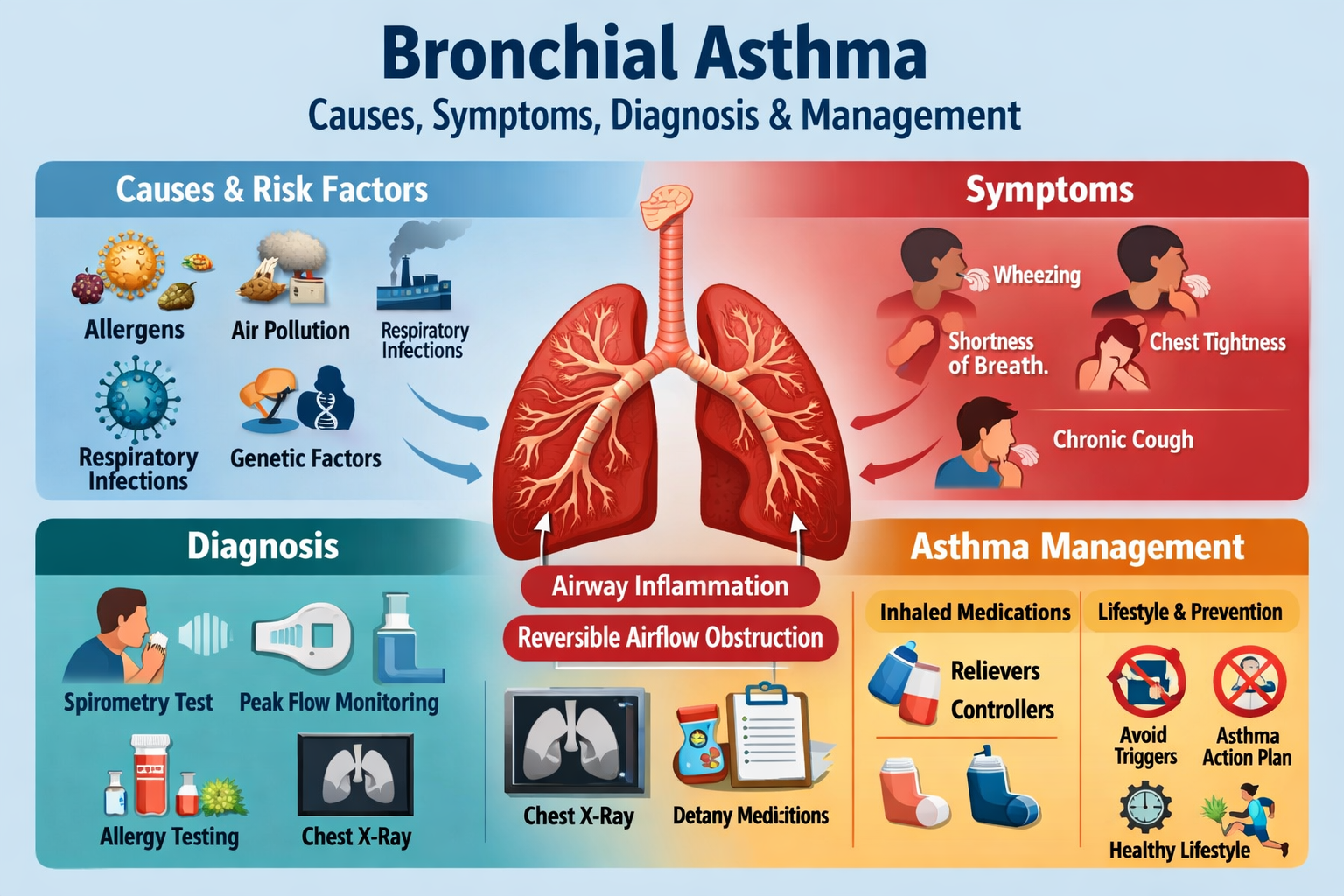
Bronchial asthma is a chronic inflammatory disease of the airways characterized by reversible airflow obstruction, bronchial hyperresponsiveness, and recurrent episodes of wheezing, breathlessness, chest tightness, and cough.
What causes bronchial asthma?
Bronchial asthma is caused by a combination of genetic predisposition and environmental factors such as allergens, air pollution, respiratory infections, tobacco smoke, and occupational exposures.
What are the common symptoms of bronchial asthma?
Common symptoms include episodic wheezing, shortness of breath, chest tightness, and cough, especially at night or early morning.
What triggers an asthma attack?
Asthma attacks can be triggered by allergens, viral infections, exercise, cold air, emotional stress, air pollution, smoking, and certain medications like aspirin or beta blockers.
How is bronchial asthma diagnosed?
Asthma is diagnosed based on clinical history and pulmonary function tests such as spirometry demonstrating reversible airflow obstruction after bronchodilator use.
What is the role of spirometry in asthma?
Spirometry confirms asthma by showing reduced FEV1 and FEV1/FVC ratio with significant improvement after bronchodilator administration.
What is the main treatment for bronchial asthma?
Inhaled corticosteroids are the cornerstone of long-term asthma management as they reduce airway inflammation and prevent exacerbations.
What medications are used for quick relief in asthma?
Short acting beta2 agonists such as salbutamol are used for rapid relief of acute asthma symptoms.
What is an acute asthma exacerbation?
An acute asthma exacerbation is a sudden worsening of asthma symptoms caused by increased airway inflammation and bronchoconstriction requiring urgent treatment.
What is status asthmaticus?
Status asthmaticus is a severe, life-threatening asthma attack that does not respond adequately to standard bronchodilator therapy.
Can asthma be cured permanently?
Bronchial asthma cannot be permanently cured, but it can be effectively controlled with proper treatment, trigger avoidance, and regular follow-up.
What is airway remodeling in asthma?
Airway remodeling refers to structural changes in the bronchial walls due to chronic inflammation, leading to persistent airflow limitation.
Is asthma the same as COPD?
Asthma and COPD are different diseases. Asthma usually has reversible airflow obstruction, while COPD is characterized by largely irreversible airflow limitation.
What is exercise induced asthma?
Exercise induced asthma is a condition where physical activity triggers bronchoconstriction, leading to coughing, wheezing, or breathlessness.
How can asthma attacks be prevented?
Asthma attacks can be prevented by regular use of controller medications, avoiding known triggers, proper inhaler technique, vaccinations, and having a written asthma action plan.
MCQ Test - Bronchial Asthma Causes Symptoms Diagnosis and Stepwise Management
Progress:
0/0
Time: 00:00
No MCQs available for this article.