This article is being expanded for more depth. Check back soon!

Multiple Endocrine Neoplasia Types Causes Symptoms Diagnosis Treatment
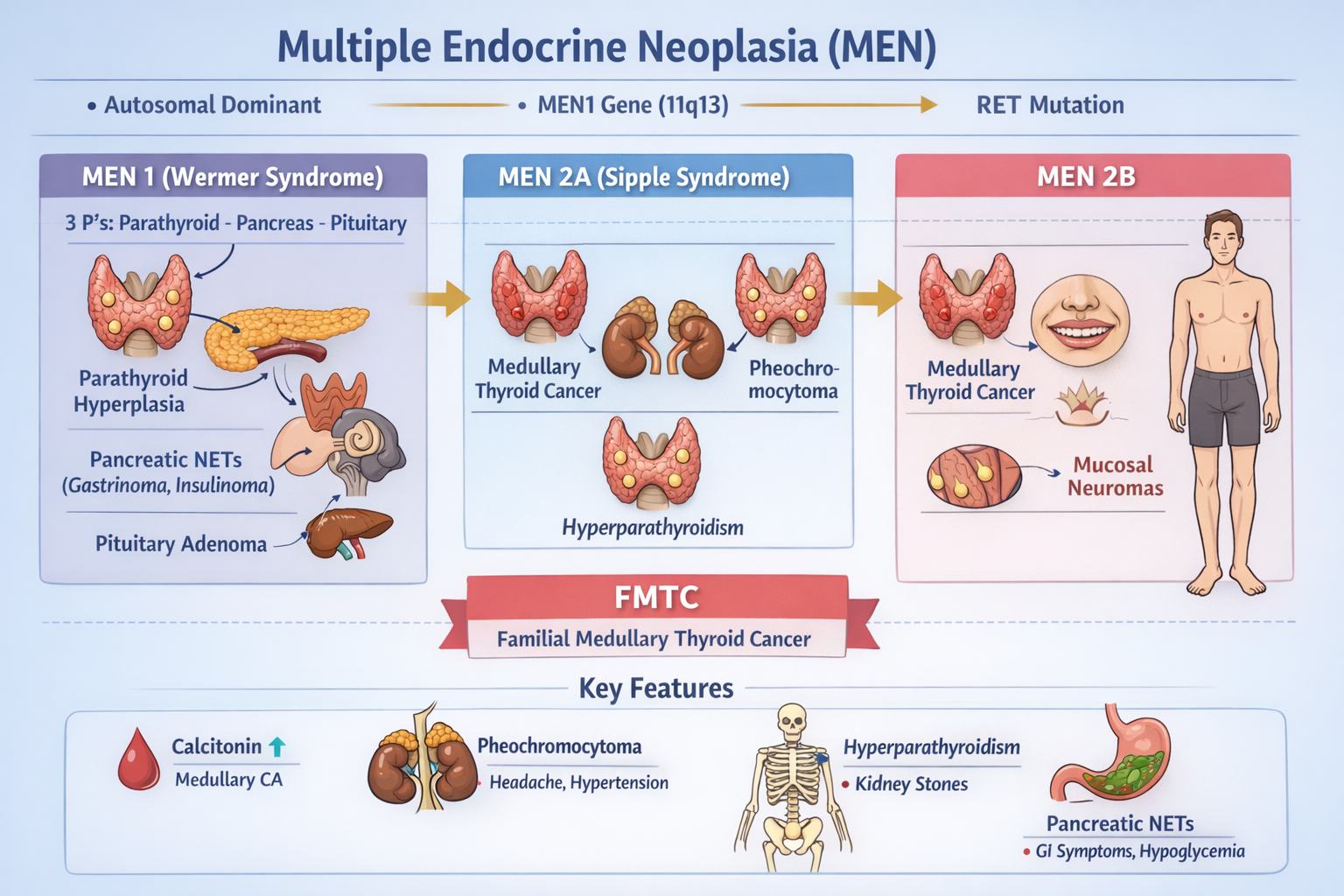
Author: Medical Editorial Team – Board-certified physicians with 10+ years in emergency medicine. Learn more.

Illustration of Multiple Endocrine Neoplasia Types Causes Symptoms Diagnosis Treatment symptoms

Medical Disclaimer: This is educational content only, not medical advice. Consult a licensed healthcare provider for diagnosis/treatment. Information based on sources like WHO/CDC guidelines (last reviewed: 2026-02-13).

About the Author: Dr. Dinesh, MBBS, is a qualified medical doctor with over [2 years – add your experience] of experience in general medicine As the owner and lead content creator of LearnWithTest.pro, Dr. Dinesh ensures all articles are based on evidence-based guidelines from sources like WHO, CDC, and peer-reviewed journals. This content is for educational purposes only and not a substitute for professional medical advice.

Contact Details: For inquiries or collaborations, reach out at:

All content is reviewed for accuracy and updated regularly (last review: January 10, 2026). We prioritize trustworthiness by citing reliable sources and adhering to medical ethics.

Frequently Asked Questions

What is multiple endocrine neoplasia

Multiple endocrine neoplasia is a group of inherited disorders characterized by the development of tumors in two or more endocrine glands, most commonly involving the parathyroid, pancreas, pituitary, thyroid and adrenal glands.

What are the main types of MEN

The main types are MEN 1, MEN 2A, MEN 2B and Familial Medullary Thyroid Carcinoma. Each type involves a different combination of endocrine tumors.

What causes MEN syndrome

MEN is caused by inherited genetic mutations. MEN 1 is caused by mutation in the MEN1 gene, while MEN 2 syndromes are caused by mutations in the RET proto-oncogene.

What tumors occur in MEN 1

MEN 1 causes tumors of the parathyroid glands, pancreatic neuroendocrine tumors such as gastrinoma and insulinoma, and pituitary adenomas, most commonly prolactinomas.

What is the most common manifestation of MEN 1

Primary hyperparathyroidism due to parathyroid hyperplasia is the most common manifestation of MEN 1.

What are the key features of MEN 2A

MEN 2A is characterized by medullary thyroid carcinoma, pheochromocytoma and primary hyperparathyroidism.

What distinguishes MEN 2B from MEN 2A

MEN 2B includes aggressive medullary thyroid carcinoma, pheochromocytoma, mucosal neuromas and a marfanoid body habitus.

Why is calcitonin important in MEN

Calcitonin is secreted by medullary thyroid carcinoma and is used as a tumor marker for diagnosis and monitoring in MEN 2.

What is the role of genetic testing in MEN

Genetic testing identifies MEN1 or RET mutations and allows early diagnosis, family screening and preventive treatment such as prophylactic thyroidectomy.

Why must pheochromocytoma be treated before thyroid surgery in MEN 2

Pheochromocytoma must be removed first because uncontrolled catecholamine release during thyroid surgery can cause fatal hypertensive crisis.

What is Zollinger Ellison syndrome in MEN

Zollinger Ellison syndrome is caused by gastrin-secreting tumors in MEN 1 leading to severe peptic ulcer disease and chronic diarrhea.

What is prophylactic thyroidectomy in MEN

Prophylactic thyroidectomy is the preventive removal of the thyroid gland in RET mutation carriers to stop development of medullary thyroid carcinoma.

Can MEN be cured

MEN cannot be cured genetically, but early detection and timely surgery and medical treatment can prevent complications and allow long-term survival.

Is MEN inherited

Yes, MEN is inherited in an autosomal dominant pattern, meaning a child has a 50 percent chance of inheriting the condition if one parent is affected.

What is the most important screening test in MEN 2

Serum calcitonin and RET genetic testing are the most important screening tools for MEN 2.

MCQ Test - Multiple Endocrine Neoplasia Types Causes Symptoms Diagnosis Treatment

Progress:
0/15
Time: 00:00

1 A 38-year-old man presents with recurrent kidney stones, bone pain, and depression. Labs show calcium 12.2 mg/dL and elevated PTH. He also has a history of peptic ulcer disease. Which MEN type is most likely?

Explanation:

MEN 1 is characterized by hyperparathyroidism and gastrinoma, causing hypercalcemia and peptic ulcer disease.

2 A MEN 1 patient has severe recurrent peptic ulcers and diarrhea. Serum gastrin is markedly elevated. What is the best confirmatory test?

Explanation:

Secretin paradoxically increases gastrin in gastrinoma, confirming Zollinger–Ellison syndrome.

3 A patient with MEN 1 has recurrent fasting hypoglycemia relieved by eating. Which tumor is responsible?

Explanation:

Insulinoma causes endogenous hyperinsulinemic hypoglycemia.

4 A patient with MEN 2 presents with episodic headache, sweating, and palpitations. Plasma metanephrines are high. Which tumor is present?

Explanation:

Pheochromocytoma causes catecholamine excess leading to episodic symptoms.

5 A patient with MEN 2 has a thyroid nodule and chronic diarrhea. Which hormone is responsible for diarrhea?

Explanation:

Medullary thyroid carcinoma secretes calcitonin which can cause diarrhea.

6 A child is found to carry a RET proto-oncogene mutation. What is the best preventive management?

Explanation:

RET mutation carriers require prophylactic thyroidectomy to prevent medullary thyroid carcinoma.

7 A MEN 2 patient is planned for surgery. Which tumor must be treated first?

Explanation:

Pheochromocytoma must be removed first to prevent perioperative hypertensive crisis.

8 A patient with MEN has mucosal neuromas and marfanoid body habitus. Which MEN type is this?

Explanation:

MEN 2B is characterized by mucosal neuromas and marfanoid habitus.

9 A MEN 1 patient has visual field defects and galactorrhea. Which tumor is most likely?

Explanation:

Prolactinoma is the most common pituitary tumor in MEN 1.

10 A MEN 1 patient develops bone pain and fractures. What is the underlying endocrine abnormality?

Explanation:

Primary hyperparathyroidism causes bone resorption and fractures.

11 A patient with MEN has pancreatic neuroendocrine tumors and pituitary adenoma. Which additional tumor is expected?

Explanation:

MEN 1 classically involves parathyroid, pancreas and pituitary glands.

12 A MEN 2A patient has recurrent kidney stones. What is the cause?

Explanation:

Hyperparathyroidism in MEN 2A leads to hypercalcemia and stones.

13 A MEN patient has a thyroid mass and very high serum calcitonin. What is the diagnosis?

Explanation:

Medullary thyroid carcinoma arises from C-cells and secretes calcitonin.

14 A MEN 1 patient has severe watery diarrhea with normal gastrin. Which tumor is responsible?

Explanation:

VIPoma causes WDHA syndrome (watery diarrhea, hypokalemia, achlorhydria).

15 A MEN 2 patient has bilateral adrenal masses. What is the most likely diagnosis?

Explanation:

Bilateral pheochromocytomas are characteristic of MEN 2.

Test Results

0%
0/15
0
Correct Answers
0
Wrong Answers
00:00
Time Taken
0
Skipped
View Exam Mode MCQs (1768044367-index-2026-01-10T165344.133.html)

Related Articles

Comments