Medical Disclaimer: This is educational content only, not medical advice. Consult a licensed healthcare provider for diagnosis/treatment. Information based on sources like WHO/CDC guidelines (last reviewed: 2026-02-13).
This article is being expanded for more depth. Check back soon!
Nipah Virus Disease Overview Symptoms Causes Diagnosis Treatment and Prevention
Frequently Asked Questions
What is Nipah virus?
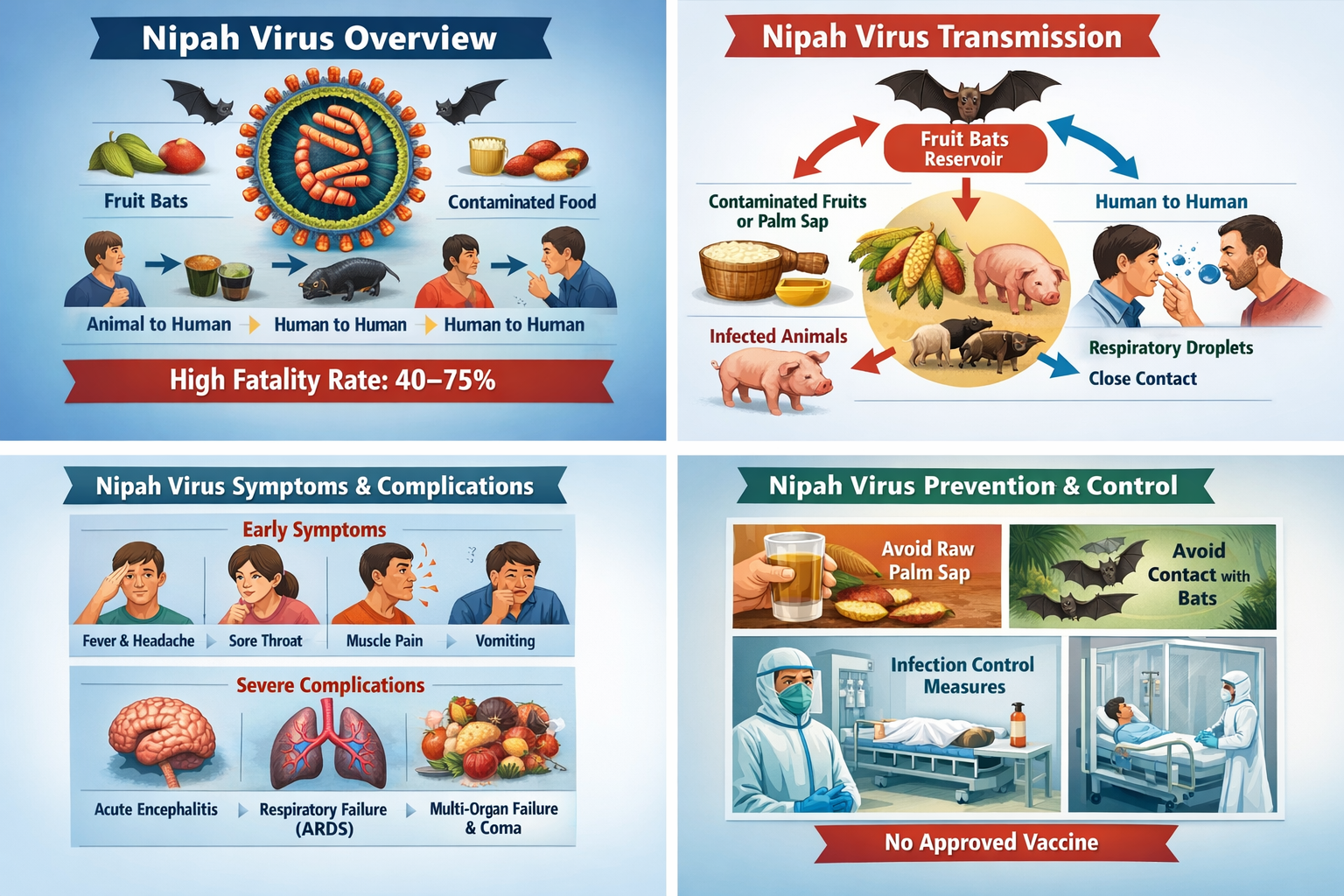
Nipah virus is a highly contagious zoonotic virus that causes severe brain infection (encephalitis) and respiratory illness, with a high fatality rate.
How is Nipah virus transmitted to humans?
Nipah virus spreads through contaminated fruits or palm sap from bats, infected animals like pigs, and human-to-human contact via respiratory droplets and body fluids.
What are the early symptoms of Nipah virus infection?
Early symptoms include fever, headache, muscle pain, fatigue, vomiting, and sore throat, followed by neurological signs.
What serious complications can Nipah virus cause?
Severe complications include encephalitis, seizures, coma, acute respiratory distress syndrome (ARDS), multi-organ failure, and death.
What is the incubation period of Nipah virus?
The incubation period usually ranges from 4 to 14 days, but in some cases can extend up to 45 days.
How is Nipah virus diagnosed?
Diagnosis is confirmed using RT-PCR to detect viral RNA in blood, throat swabs, or cerebrospinal fluid, along with antibody tests such as ELISA.
Is there a specific treatment for Nipah virus?
There is no specific approved antiviral treatment; management is mainly supportive, including intensive care, ventilation, seizure control, and hydration.
Are there any experimental drugs for Nipah virus?
Experimental treatments include Ribavirin, monoclonal antibody m102.4, and Remdesivir, though none are officially approved.
What is the fatality rate of Nipah virus?
The case fatality rate ranges from approximately 40% to 75%, depending on outbreak severity and access to medical care.
Can Nipah virus spread from person to person?
Yes, human-to-human transmission can occur through close contact with infected individuals, especially in healthcare or household settings.
What long-term effects can occur in Nipah survivors?
Survivors may experience memory loss, personality changes, chronic fatigue, seizure disorders, and relapsing encephalitis.
Who is at highest risk of Nipah virus infection?
High-risk groups include people consuming raw date palm sap, healthcare workers without protective equipment, caregivers, and residents of outbreak regions.
How can Nipah virus outbreaks be prevented?
Prevention includes avoiding raw palm sap, washing fruits, reducing bat and animal exposure, isolating infected patients, and following infection control measures.
Is there a vaccine available for Nipah virus?
Currently, no approved vaccine exists, but several vaccine candidates are under development and clinical trials.
Why is Nipah virus considered a global health threat?
Nipah virus is considered a priority pathogen due to its high mortality, ability to spread between humans, lack of treatment, and pandemic potential.
MCQ Test - Nipah Virus Disease Overview Symptoms Causes Diagnosis Treatment and Prevention
Progress:
0/15
Time: 00:00
Test Results
0%
0/15
0
Correct Answers
0
Wrong Answers
00:00
Time Taken
0
Skipped