Aortic Regurgitation Comprehensive Guide Causes Symptoms Diagnosis Treatment
Author: Medical Editorial Team – Board-certified physicians with 10+ years in emergency medicine. Learn more.

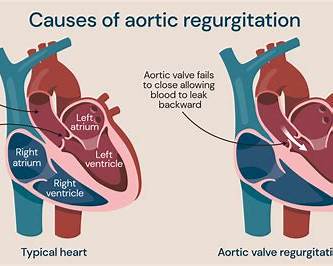
Illustration of Aortic Regurgitation Comprehensive Guide Causes Symptoms Diagnosis Treatment symptoms

Medical Disclaimer: This is educational content only, not medical advice. Consult a licensed healthcare provider for diagnosis/treatment. Information based on sources like WHO/CDC guidelines (last reviewed: 2026-02-13).

About the Author: Dr. Dinesh, MBBS, is a qualified medical doctor with over [2 years – add your experience] of experience in general medicine As the owner and lead content creator of LearnWithTest.pro, Dr. Dinesh ensures all articles are based on evidence-based guidelines from sources like WHO, CDC, and peer-reviewed journals. This content is for educational purposes only and not a substitute for professional medical advice.

Contact Details: For inquiries or collaborations, reach out at:

All content is reviewed for accuracy and updated regularly (last review: January 10, 2026). We prioritize trustworthiness by citing reliable sources and adhering to medical ethics.

Frequently Asked Questions

What is aortic regurgitation?

Aortic regurgitation is a valvular heart disease in which blood flows back from the aorta into the left ventricle during diastole due to incomplete closure of the aortic valve.

What are the main causes of aortic regurgitation?

Common causes include bicuspid aortic valve, rheumatic heart disease, infective endocarditis, aortic root dilation, Marfan syndrome, aortic dissection, and degenerative valve disease.

What is the difference between acute and chronic aortic regurgitation?

Acute aortic regurgitation develops suddenly and causes severe pulmonary edema and hypotension, while chronic aortic regurgitation progresses slowly with left ventricular dilation and a long asymptomatic phase.

What are the classic symptoms of chronic aortic regurgitation?

Symptoms include exertional dyspnea, fatigue, palpitations, angina, orthopnea, and paroxysmal nocturnal dyspnea, usually appearing late in the disease.

Why does aortic regurgitation cause a wide pulse pressure?

Wide pulse pressure occurs due to increased systolic pressure from high stroke volume and decreased diastolic pressure from rapid blood runoff back into the left ventricle.

What is the characteristic murmur of aortic regurgitation?

A high-pitched, early diastolic decrescendo murmur best heard along the left sternal border with the patient sitting forward.

What is Austin Flint murmur?

Austin Flint murmur is a low-pitched mid-diastolic murmur at the apex caused by the regurgitant aortic jet interfering with mitral valve opening in severe aortic regurgitation.

Which investigation is most important for diagnosing aortic regurgitation?

Echocardiography is the key investigation as it identifies the cause, grades severity, assesses left ventricular size and function, and evaluates the aorta.

What echocardiographic finding strongly suggests severe aortic regurgitation?

Holodiastolic flow reversal in the descending aorta is a hallmark finding of severe aortic regurgitation.

When is surgery indicated in asymptomatic severe aortic regurgitation?

Surgery is indicated when left ventricular ejection fraction is 55 percent or less, LV end-systolic dimension exceeds 50 mm, or indexed LVESD is greater than 25 mm per square meter.

Why is surgery urgent in acute severe aortic regurgitation?

The left ventricle cannot adapt to sudden volume overload, leading to rapid pulmonary edema, cardiogenic shock, and high mortality without urgent valve replacement.

Which drugs are useful in chronic aortic regurgitation?

Afterload-reducing agents such as ACE inhibitors, ARBs, and dihydropyridine calcium channel blockers are useful, especially in patients with hypertension or heart failure.

Why is intra-aortic balloon pump contraindicated in aortic regurgitation?

Intra-aortic balloon pump increases diastolic pressure and worsens regurgitant flow back into the left ventricle.

What is the role of cardiac MRI in aortic regurgitation?

Cardiac MRI is used when echocardiographic assessment is inconclusive, providing accurate measurement of regurgitant volume, regurgitant fraction, and ventricular volumes.

What are the major complications of untreated severe aortic regurgitation?

Complications include irreversible left ventricular dysfunction, heart failure, arrhythmias, pulmonary hypertension, infective endocarditis, and increased mortality.

MCQ Test - Aortic Regurgitation Comprehensive Guide Causes Symptoms Diagnosis Treatment

Progress:
0/15
Time: 00:00

1 A 45-year-old man presents with sudden onset severe dyspnea, pink frothy sputum, hypotension, and a recent history of tearing chest pain radiating to the back. An early diastolic murmur is barely audible. What is the most likely diagnosis?

Explanation:

Type A aortic dissection can acutely disrupt the aortic valve, causing severe acute aortic regurgitation with hypotension and pulmonary edema; the murmur may be soft due to rapid pressure equalization.

2 A 60-year-old asymptomatic patient with severe chronic aortic regurgitation has an LVEF of 54% and LVESD of 49 mm. What is the most appropriate management?

Explanation:

In severe AR, surgery is indicated when LVEF is ≤55% even in asymptomatic patients to prevent irreversible LV dysfunction.

3 A patient with chronic aortic regurgitation develops angina despite normal coronary arteries. What is the most likely mechanism?

Explanation:

Low diastolic aortic pressure in AR reduces coronary perfusion while LV hypertrophy increases myocardial oxygen demand.

4 Which physical finding is most characteristic of severe chronic aortic regurgitation?

Explanation:

High stroke volume and rapid diastolic runoff produce wide pulse pressure and bounding peripheral pulses.

5 A patient with infective endocarditis suddenly develops hypotension and acute pulmonary edema. What valve-related complication is most likely?

Explanation:

Leaflet destruction or perforation in infective endocarditis commonly causes acute severe aortic regurgitation.

6 In acute severe aortic regurgitation, which intervention is contraindicated?

Explanation:

Intra-aortic balloon pump increases diastolic pressure and worsens regurgitant flow, making it contraindicated in AR.

7 Which echocardiographic finding is most specific for severe aortic regurgitation?

Explanation:

Holodiastolic flow reversal in the descending aorta is a hallmark of severe AR.

8 A low-pitched mid-diastolic murmur at the apex in severe aortic regurgitation is known as:

Explanation:

Austin Flint murmur occurs when the regurgitant aortic jet interferes with mitral valve opening.

9 Which left ventricular adaptation initially allows patients with chronic AR to remain asymptomatic?

Explanation:

Chronic volume overload leads to eccentric hypertrophy, maintaining stroke volume and cardiac output.

10 Which parameter best determines timing of surgery in chronic aortic regurgitation?

Explanation:

LV end-systolic dimension is a key predictor of irreversible LV dysfunction and surgical timing.

11 A patient with severe AR has an indexed LVESD of 26 mm/m² but no symptoms. What is the best management?

Explanation:

Indexed LVESD greater than 25 mm/m² is an indication for surgery even in asymptomatic patients.

12 Why may the classic early diastolic murmur be soft or absent in acute aortic regurgitation?

Explanation:

Rapid pressure equalization across the valve reduces the diastolic gradient, making the murmur faint.

13 Which condition is the most common cause of chronic aortic regurgitation in young adults?

Explanation:

Bicuspid aortic valve is the most common cause of chronic AR in younger patients.

14 Which imaging modality best quantifies regurgitant volume when echocardiography is inconclusive?

Explanation:

Cardiac MRI accurately measures regurgitant volume and fraction and LV volumes.

15 A patient with severe AR is scheduled for AVR and has an ascending aorta diameter of 4.7 cm. What is the best surgical approach?

Explanation:

When AVR is planned, the ascending aorta should be replaced if diameter is ≥4.5 cm to prevent future aortic complications.

Test Results

0%
0/15
0
Correct Answers
0
Wrong Answers
00:00
Time Taken
0
Skipped
View Exam Mode MCQs (1767113782-index-2025-12-30T222456.016.html)

Related Articles

Comments