This article is being expanded for more depth. Check back soon!

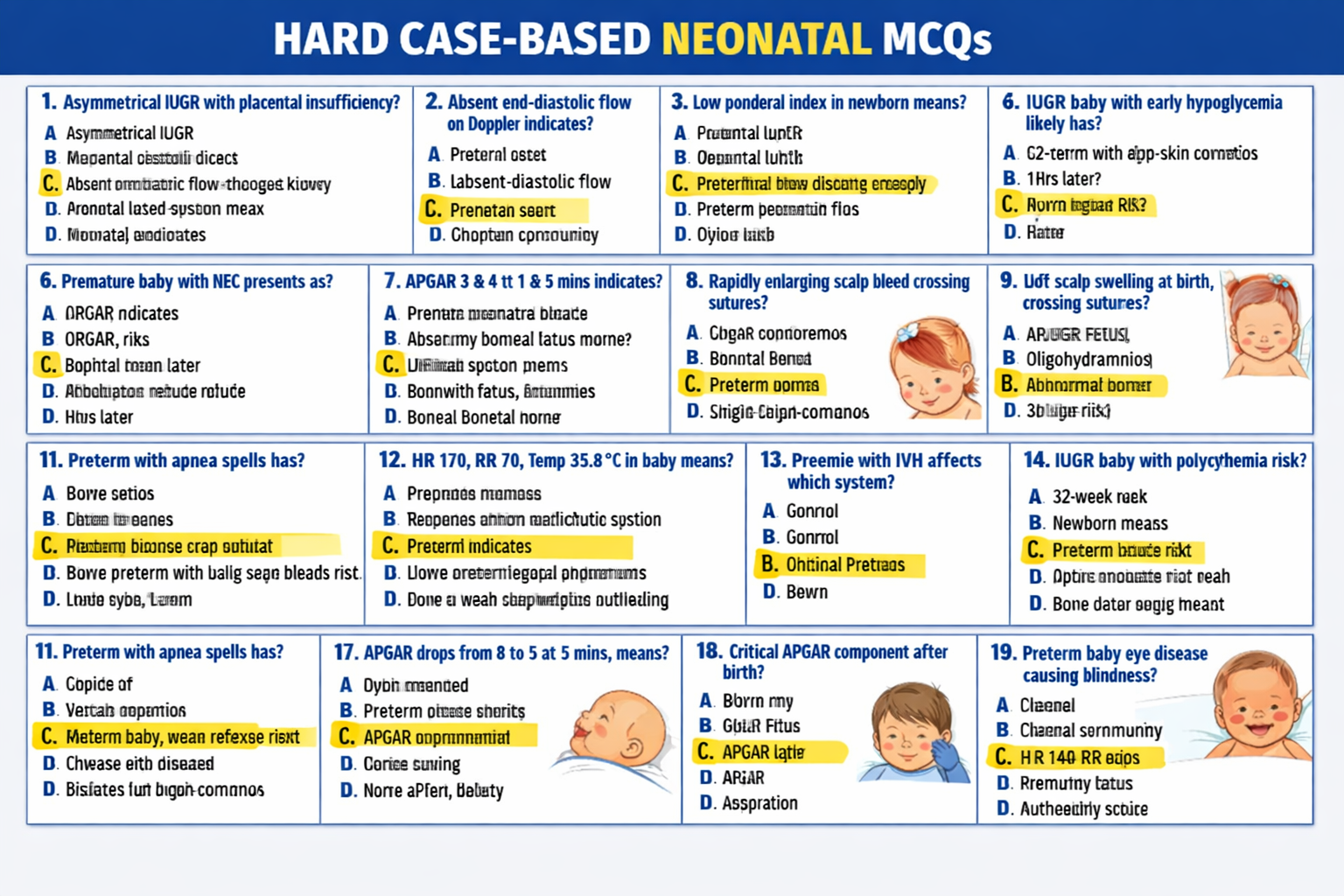
Normal Newborn Assessment, IUGR Evaluation, APGAR Score, Preterm Complications, Head Swellings
Author: Medical Editorial Team – Board-certified physicians with 10+ years in emergency medicine. Learn more.

Illustration of Normal Newborn Assessment, IUGR Evaluation, APGAR Score, Preterm Complications, Head Swellings symptoms

Medical Disclaimer: This is educational content only, not medical advice. Consult a licensed healthcare provider for diagnosis/treatment. Information based on sources like WHO/CDC guidelines (last reviewed: 2026-02-13).

About the Author: Dr. Dinesh, MBBS, is a qualified medical doctor with over [2 years – add your experience] of experience in general medicine As the owner and lead content creator of LearnWithTest.pro, Dr. Dinesh ensures all articles are based on evidence-based guidelines from sources like WHO, CDC, and peer-reviewed journals. This content is for educational purposes only and not a substitute for professional medical advice.

Contact Details: For inquiries or collaborations, reach out at:

All content is reviewed for accuracy and updated regularly (last review: January 10, 2026). We prioritize trustworthiness by citing reliable sources and adhering to medical ethics.

Frequently Asked Questions

What is a normal newborn?

A normal newborn is a baby born between 37–42 weeks of gestation with appropriate weight for gestational age, stable vital signs, good tone, strong cry, and no major congenital anomalies.

What is IUGR (Intrauterine Growth Restriction)?

IUGR is a condition where the fetus fails to achieve its expected growth potential, usually defined as fetal weight below the 10th percentile for gestational age.

What are the types of IUGR?

There are two main types: Symmetrical IUGR (early insult causing proportionate small size) and Asymmetrical IUGR (late placental insufficiency causing head sparing with body wasting).

What is the ponderal index and why is it important?

The ponderal index is calculated as Weight(g) × 100 / Length(cm)^3. It helps differentiate symmetrical and asymmetrical IUGR. A low ponderal index suggests wasting and asymmetrical IUGR.

How is IUGR assessed antenatally?

Antenatal assessment includes fundal height measurement, ultrasound biometry (especially abdominal circumference), amniotic fluid index, Doppler studies of umbilical artery, and biophysical profile monitoring.

How is IUGR assessed postnatally?

Postnatal assessment includes measuring birth weight, length, head circumference, ponderal index, and identifying clinical features such as thin body, reduced fat, and loose skin folds.

What are the complications of IUGR in newborns?

Common complications include hypoglycemia, hypothermia, polycythemia, birth asphyxia, increased infection risk, and poor neurodevelopmental outcomes.

What is the difference between a preterm and term baby?

Preterm babies are born before 37 weeks and have immature organs, thin skin, weak reflexes, and higher risk of complications, while term babies are born between 37–42 weeks with mature systems.

What are common complications of preterm birth?

Complications include respiratory distress syndrome, apnea of prematurity, necrotizing enterocolitis, intraventricular hemorrhage, sepsis, hypoglycemia, and long-term developmental delay.

What is the APGAR score used for?

The APGAR score evaluates newborn condition at 1 and 5 minutes after birth using Appearance, Pulse, Grimace, Activity, and Respiration to assess need for resuscitation.

What is the normal APGAR score range?

A score of 7–10 is normal, 4–6 indicates moderate depression, and 0–3 indicates severe depression requiring urgent resuscitation.

What are normal vital signs in a newborn?

Normal newborn vital signs include heart rate 120–160/min, respiratory rate 30–60/min, temperature 36.5–37.5°C, and oxygen saturation above 90% after 10 minutes.

What is caput succedaneum?

Caput succedaneum is scalp edema caused by pressure during labor. It is present at birth, soft, crosses suture lines, and resolves within 1–2 days.

What is cephalhematoma?

Cephalhematoma is subperiosteal bleeding over the skull bone. It appears hours after birth, does not cross suture lines, and may cause jaundice due to blood breakdown.

What is subgaleal hemorrhage?

Subgaleal hemorrhage is bleeding between the scalp and skull that crosses suture lines and can rapidly expand, leading to massive blood loss, shock, and life-threatening complications.

How can caput succedaneum and cephalhematoma be differentiated?

Caput is soft, present at birth, and crosses sutures, while cephalhematoma is firm, appears later, and is confined to one skull bone without crossing sutures.

Why is subgaleal hemorrhage considered an emergency?

Because it can cause severe blood loss into the scalp space, leading to hypovolemic shock, anemia, and death if not urgently treated.

What are normal findings on newborn physical examination?

Normal findings include pink color, strong cry, flexed posture, good tone, intact reflexes (Moro, suck, grasp), soft fontanelle, and symmetrical chest movement.

What is the brain-sparing effect in IUGR?

In asymmetrical IUGR, blood flow is preferentially directed to the brain, preserving head growth while the rest of the body shows growth restriction.

What is the best monitoring method for severe IUGR fetus?

Serial ultrasound growth monitoring combined with Doppler flow studies and biophysical profile is the best approach for severe IUGR surveillance.

MCQ Test - Normal Newborn Assessment, IUGR Evaluation, APGAR Score, Preterm Complications, Head Swellings

Progress:
0/15
Time: 00:00

1 A 37-week newborn is delivered to a mother with severe preeclampsia. The baby appears thin with reduced subcutaneous fat, loose skin folds, and a relatively large head compared to the body. Length is near normal but weight is below the 5th percentile. Which diagnosis best explains these findings?

Explanation:

Asymmetrical IUGR is typically caused by late placental insufficiency, leading to head sparing and body wasting with low birth weight but near-normal length.

2 A fetus at 33 weeks has abdominal circumference <3rd percentile while head circumference remains normal. Umbilical artery Doppler shows absent end-diastolic flow. What does this Doppler finding indicate?

Explanation:

Absent end-diastolic flow in the umbilical artery indicates severe placental vascular resistance and is associated with increased perinatal mortality.

3 A newborn weighs 1700 g and measures 47 cm in length. The ponderal index is significantly low. What does a low ponderal index suggest in this infant?

Explanation:

A low ponderal index reflects reduced weight relative to length, suggesting wasting typical of asymmetrical IUGR.

4 A growth-restricted newborn develops jitteriness and lethargy within 2 hours after birth. Blood glucose is 32 mg/dL. Why are IUGR babies prone to this complication?

Explanation:

IUGR infants have reduced glycogen and fat reserves, predisposing them to early hypoglycemia.

5 A 30-week preterm infant develops grunting, nasal flaring, chest retractions, and requires oxygen soon after birth. What is the most likely diagnosis?

Explanation:

RDS is common in preterm infants due to immature surfactant production leading to alveolar collapse.

6 A preterm baby develops abdominal distension, feeding intolerance, and bloody stools. X-ray shows pneumatosis intestinalis. What is the diagnosis?

Explanation:

NEC is a life-threatening gastrointestinal complication of prematurity characterized by intestinal necrosis and pneumatosis.

7 A newborn has an APGAR score of 2 at 1 minute and 3 at 5 minutes despite resuscitation. What does this indicate?

Explanation:

Persistently low APGAR scores indicate severe neonatal depression and need for urgent NICU management.

8 After vacuum-assisted delivery, a newborn develops a rapidly enlarging diffuse scalp swelling that crosses suture lines and midline. The infant becomes pale and hypotensive. What is the most likely diagnosis?

Explanation:

Subgaleal hemorrhage is life-threatening, crosses sutures, and can cause massive blood loss leading to shock.

9 A newborn has a soft, pitting scalp swelling present at birth that crosses suture lines and resolves within 24–48 hours. What is the diagnosis?

Explanation:

Caput succedaneum is scalp edema present at birth, crosses sutures, and resolves quickly.

10 A newborn develops a firm parietal swelling 8 hours after birth. It does not cross suture lines and may increase jaundice risk. What is the diagnosis?

Explanation:

Cephalhematoma is subperiosteal bleeding confined to one bone and can cause jaundice due to blood breakdown.

11 A preterm infant at 28 weeks develops recurrent apnea episodes due to immature respiratory control. What is the most likely diagnosis?

Explanation:

Apnea of prematurity occurs due to immaturity of brainstem respiratory centers in very preterm infants.

12 A newborn has HR 175/min, RR 70/min, and temperature 35.9°C. What is the most urgent abnormality requiring immediate correction?

Explanation:

Temperature below 36.5°C is abnormal and dangerous in newborns, leading to hypoglycemia and metabolic stress.

13 A 32-week preterm infant is at risk of intraventricular hemorrhage due to fragile germinal matrix vessels. Which organ system is primarily involved?

Explanation:

Intraventricular hemorrhage is a serious CNS complication of prematurity.

14 A fetus suspected of severe IUGR has oligohydramnios and abnormal Doppler findings. What is the best antenatal monitoring approach?

Explanation:

Severe IUGR requires close fetal surveillance with serial ultrasound, Doppler flow studies, and biophysical profile.

15 A growth-restricted newborn develops polycythemia due to chronic intrauterine hypoxia. What is the major danger of neonatal polycythemia?

Explanation:

Polycythemia increases blood viscosity, leading to reduced tissue perfusion, thrombosis, stroke risk, and metabolic complications.

Test Results

0%
0/15
0
Correct Answers
0
Wrong Answers
00:00
Time Taken
0
Skipped
View Exam Mode MCQs (1770549645-index.html)

Related Articles

Comments