Medical Disclaimer: This is educational content only, not medical advice. Consult a licensed healthcare provider for diagnosis/treatment. Information based on sources like WHO/CDC guidelines (last reviewed: 2026-02-13).
This article is being expanded for more depth. Check back soon!
Snake Bite Clinical Features Diagnosis and Management Guide
Frequently Asked Questions
What is a snake bite?
A snake bite is an injury caused by the bite of a snake that may result in envenomation (venom injection) or may be a dry bite without venom injection.
What are the common venomous snakes responsible for snake bites in India?
The common venomous snakes in India are known as the Big Four: cobra, krait, Russell’s viper, and saw-scaled viper.
What are the main types of snake venom?
The main types of snake venom are neurotoxic, hemotoxic (vasculotoxic), myotoxic, cytotoxic, and mixed venom.
What are the early signs of neurotoxic snake bite?
Early signs include ptosis, blurred vision, difficulty speaking, difficulty swallowing, and progressive muscle weakness leading to respiratory failure.
What are the features of hemotoxic snake bite?
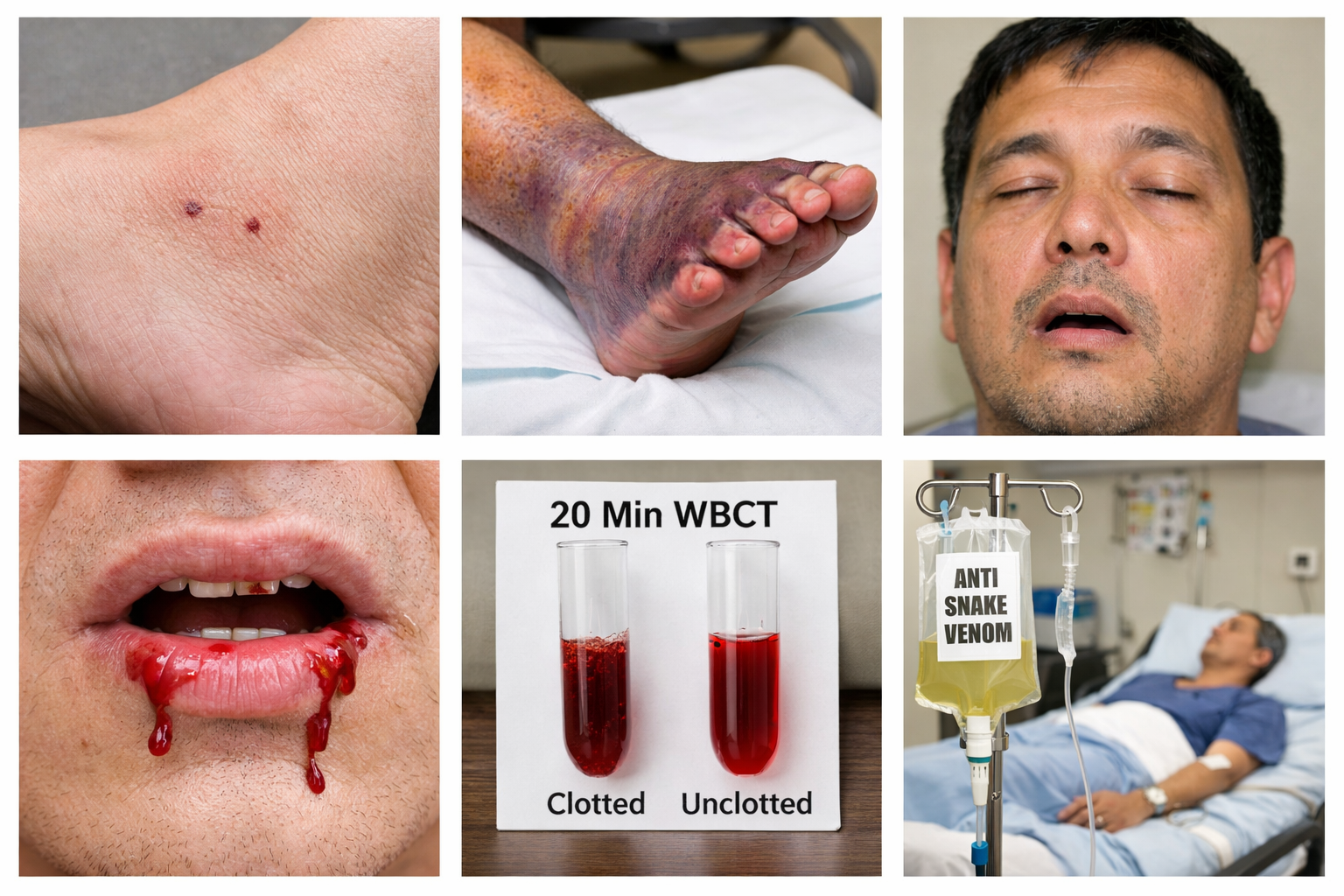
Hemotoxic snake bite causes bleeding from gums or wounds, incoagulable blood, bruising, hypotension, shock, and acute kidney injury.
What is a dry bite?
A dry bite is a snake bite in which no venom is injected, resulting in minimal or no local and systemic signs of envenomation.
What is the 20-minute whole blood clotting test?
The 20-minute whole blood clotting test is a bedside test used to detect hemotoxic envenomation by assessing whether blood clots normally within 20 minutes.
What are the indications for anti-snake venom administration?
Indications include neuroparalysis, spontaneous bleeding, incoagulable blood on 20WBCT, rapidly progressive swelling, shock, and acute kidney injury.
What is the role of anti-snake venom in snake bite management?
Anti-snake venom neutralizes circulating free venom and prevents progression of systemic toxicity but does not reverse established tissue damage.
What are common adverse reactions to anti-snake venom?
Common adverse reactions include anaphylaxis, fever, chills, urticaria, and delayed serum sickness occurring days after administration.
What is the most important cause of death in neurotoxic snake bite?
Respiratory failure due to paralysis of respiratory muscles is the most important cause of death.
Is anti-snake venom safe in pregnancy and children?
Yes, anti-snake venom is safe and life-saving in pregnancy and children, and the dose is the same as in adults.
Why should tourniquets not be used in snake bite?
Tourniquets can cause ischemia and sudden release may lead to rapid systemic venom absorption causing shock and worsening toxicity.
How long should a suspected dry bite be observed?
A suspected dry bite should be observed for at least 24 hours to ensure no delayed signs of envenomation develop.
What factors worsen prognosis in snake bite?
Delayed hospital presentation, delayed anti-snake venom administration, severe envenomation, respiratory failure, and acute kidney injury worsen prognosis.
MCQ Test - Snake Bite Clinical Features Diagnosis and Management Guide
Progress:
0/15
Time: 00:00
Test Results
0%
0/15
0
Correct Answers
0
Wrong Answers
00:00
Time Taken
0
Skipped