Medical Disclaimer: This is educational content only, not medical advice. Consult a licensed healthcare provider for diagnosis/treatment. Information based on sources like WHO/CDC guidelines (last reviewed: 2026-02-13).
This article is being expanded for more depth. Check back soon!
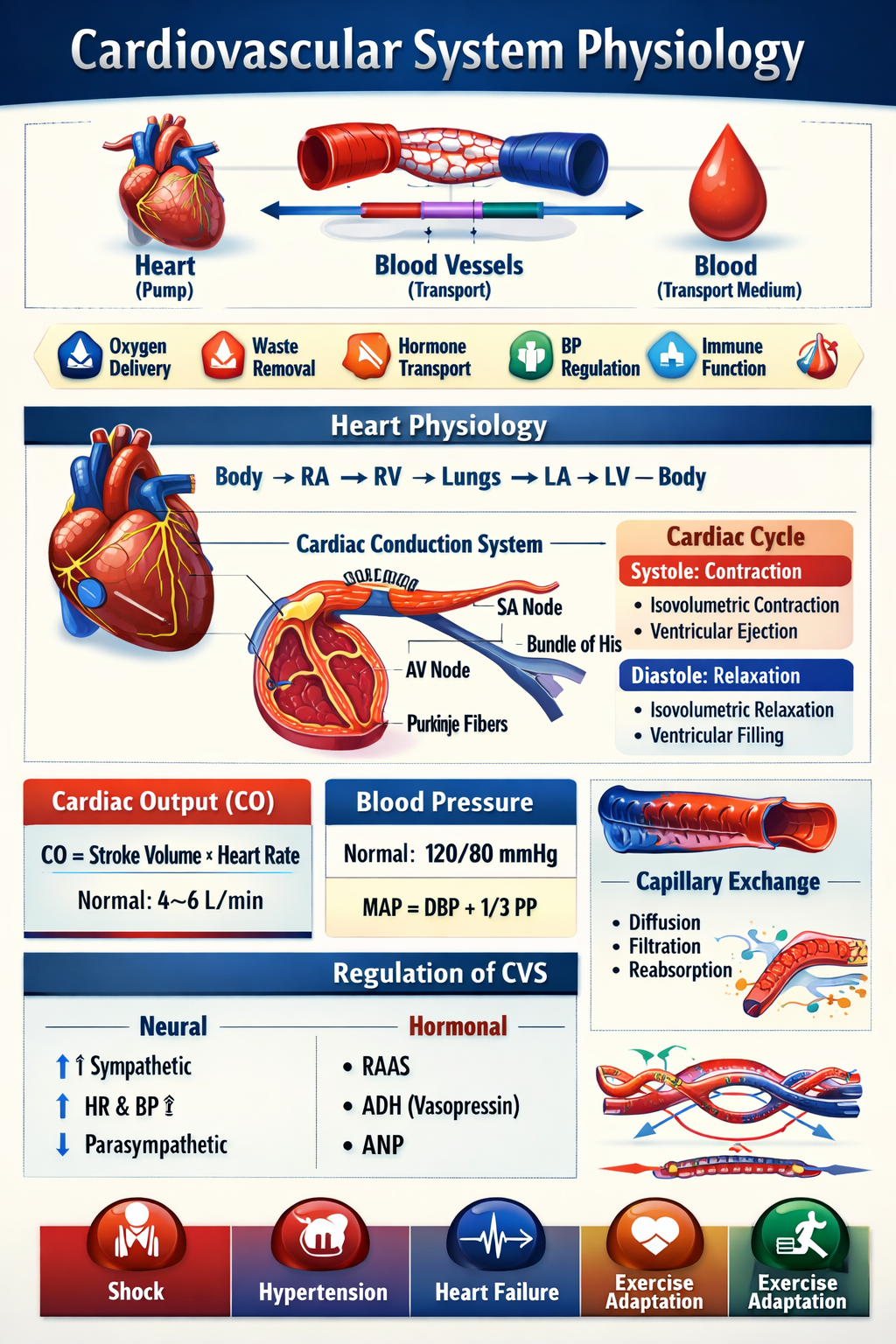
Cardiovascular System Physiology Complete Detailed Guide for Medical Students
Frequently Asked Questions
What is the primary function of the cardiovascular system?
The cardiovascular system delivers oxygen and nutrients to tissues, removes carbon dioxide and waste products, maintains blood pressure, regulates temperature, and supports homeostasis.
What is cardiac output?
Cardiac output is the volume of blood pumped by the heart per minute and is calculated as stroke volume multiplied by heart rate.
What factors determine stroke volume?
Stroke volume is determined by preload, afterload, myocardial contractility, and ventricular compliance.
What is the Frank–Starling law of the heart?
The Frank–Starling law states that an increase in venous return leads to increased ventricular filling and stronger myocardial contraction, increasing stroke volume.
What controls heart rate physiologically?
Heart rate is controlled by the sinoatrial node and modulated by autonomic nervous system activity, hormones, and reflexes.
What is the function of the cardiac conduction system?
The cardiac conduction system generates and transmits electrical impulses to coordinate atrial and ventricular contractions.
What causes systolic and diastolic blood pressure?
Systolic pressure is produced by ventricular contraction, while diastolic pressure reflects arterial recoil and peripheral resistance.
What is mean arterial pressure (MAP)?
Mean arterial pressure is the average pressure in arteries during one cardiac cycle and ensures adequate organ perfusion.
What is the role of arterioles in circulation?
Arterioles are resistance vessels that regulate peripheral vascular resistance and control blood pressure.
How does the baroreceptor reflex regulate blood pressure?
Baroreceptors detect changes in arterial pressure and adjust heart rate and vascular tone via autonomic pathways.
What is the physiological basis of venous return?
Venous return depends on skeletal muscle pump, respiratory pump, venous valves, and sympathetic venoconstriction.
What is capillary exchange?
Capillary exchange involves diffusion, filtration, and reabsorption of fluids and solutes regulated by Starling forces.
What is coronary circulation?
Coronary circulation supplies oxygenated blood to the myocardium, primarily occurring during diastole.
How does exercise affect cardiovascular physiology?
Exercise increases heart rate, stroke volume, cardiac output, and redistributes blood flow to active muscles.
What is the physiological basis of shock?
Shock results from inadequate tissue perfusion due to reduced cardiac output, low blood volume, or decreased vascular resistance.
What causes pulse pressure widening?
Pulse pressure widens due to increased stroke volume or reduced arterial compliance, such as in aortic regurgitation.
What is the function of the pulmonary circulation?
Pulmonary circulation carries deoxygenated blood to the lungs for gas exchange and returns oxygenated blood to the heart.
What causes left ventricular hypertrophy?
Left ventricular hypertrophy occurs due to chronic pressure overload, such as hypertension or aortic stenosis.
How does aging affect cardiovascular physiology?
Aging reduces arterial elasticity, increases blood pressure, decreases cardiac reserve, and slows reflex responses.
Why is the refractory period important in cardiac muscle?
The refractory period prevents tetanic contraction and ensures rhythmic and coordinated cardiac contractions.
MCQ Test - Cardiovascular System Physiology Complete Detailed Guide for Medical Students
Progress:
0/15
Time: 00:00
Test Results
0%
0/15
0
Correct Answers
0
Wrong Answers
00:00
Time Taken
0
Skipped