Medical Disclaimer: This is educational content only, not medical advice. Consult a licensed healthcare provider for diagnosis/treatment. Information based on sources like WHO/CDC guidelines (last reviewed: 2026-02-13).
This article is being expanded for more depth. Check back soon!
Osteoporosis Causes Symptoms Diagnosis and Treatment Guide
Frequently Asked Questions
What is osteoporosis?
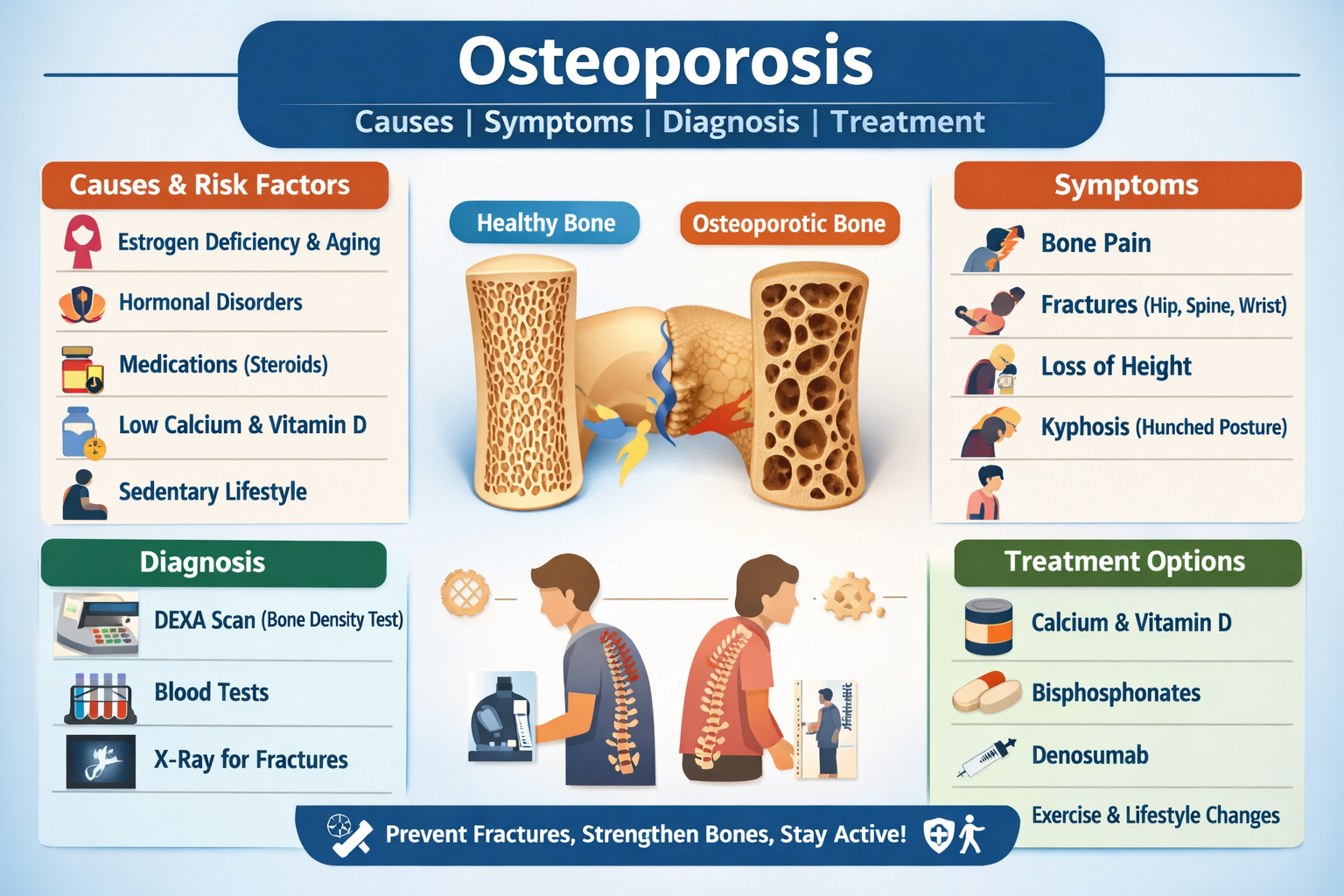
Osteoporosis is a bone disease characterized by decreased bone density and structural weakness, increasing the risk of fractures.
What are the main causes of osteoporosis?
Causes include aging, postmenopausal estrogen deficiency, long-term steroid use, poor calcium and vitamin D intake, sedentary lifestyle, and genetic factors.
Who is at highest risk of developing osteoporosis?
Postmenopausal women, elderly individuals, people with low body weight, smokers, chronic steroid users, and those with hormonal disorders are at higher risk.
What are the early symptoms of osteoporosis?
Osteoporosis is often asymptomatic in early stages until fractures occur; early signs may include mild back pain and gradual height loss.
What are common complications of osteoporosis?
Common complications include hip fractures, vertebral compression fractures, chronic back pain, spinal deformity, disability, and increased mortality.
How is osteoporosis diagnosed?
The gold standard diagnostic test is a DEXA scan, which measures bone mineral density and provides a T-score.
What does a T-score of −2.5 indicate?
A T-score of −2.5 or lower confirms the diagnosis of osteoporosis.
What lifestyle changes help prevent osteoporosis?
Regular weight-bearing exercise, adequate calcium and vitamin D intake, smoking cessation, limiting alcohol, and fall prevention strategies help prevent osteoporosis.
What is the first-line treatment for osteoporosis?
Bisphosphonates such as alendronate are the first-line pharmacologic treatment to reduce bone resorption and fracture risk.
What are alternatives if bisphosphonates are not tolerated?
Alternatives include denosumab, raloxifene, teriparatide, and hormone replacement therapy depending on patient profile.
How does vitamin D help in osteoporosis?
Vitamin D improves calcium absorption and supports bone mineralization, reducing bone loss.
What is a fragility fracture?
A fragility fracture is a bone fracture that occurs after minor trauma due to weakened osteoporotic bones.
Can osteoporosis be reversed?
Bone loss cannot be fully reversed, but treatment can significantly improve bone density and reduce fracture risk.
How often should bone density be tested?
DEXA scanning is usually recommended every 1–2 years in high-risk individuals or those on treatment.
What diet is best for osteoporosis?
A diet rich in calcium, vitamin D, protein, leafy greens, dairy products, and fortified foods supports bone health.
Does osteoporosis affect men?
Yes, men can develop osteoporosis, especially with aging, hypogonadism, alcohol use, or long-term medication use.
What medications increase osteoporosis risk?
Long-term corticosteroids, anticonvulsants, heparin, aromatase inhibitors, and excessive thyroid hormone increase osteoporosis risk.
How does teriparatide treat osteoporosis?
Teriparatide stimulates osteoblast activity, promoting new bone formation and improving bone strength.
What are the warning signs of osteoporotic fractures?
Sudden back pain, height loss, spinal curvature, hip pain after minor falls, and reduced mobility are warning signs.
How can falls be prevented in osteoporosis patients?
Home safety modifications, balance training, vision correction, proper footwear, and strength exercises reduce fall risk.
MCQ Test - Osteoporosis Causes Symptoms Diagnosis and Treatment Guide
Progress:
0/15
Time: 00:00
Test Results
0%
0/15
0
Correct Answers
0
Wrong Answers
00:00
Time Taken
0
Skipped