Medical Disclaimer: This is educational content only, not medical advice. Consult a licensed healthcare provider for diagnosis/treatment. Information based on sources like WHO/CDC guidelines (last reviewed: 2026-02-13).
This article is being expanded for more depth. Check back soon!
Malpresentation in Pregnancy Causes Types Diagnosis and Management
Frequently Asked Questions
What is malpresentation in pregnancy?
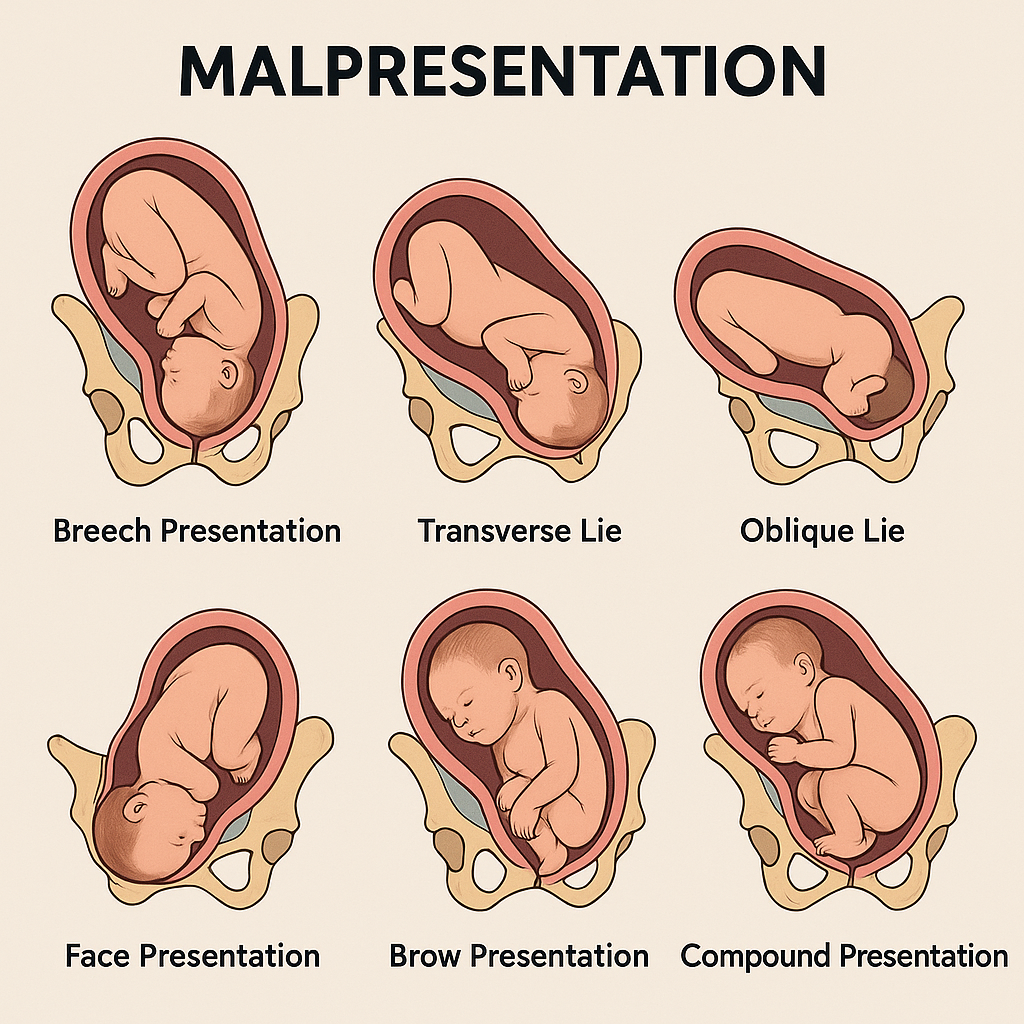
Malpresentation is any fetal presentation other than vertex (head-down, occipito-anterior) at the time of labor, such as breech, transverse lie, face, or brow presentation.
What is the most common malpresentation at term?
Breech presentation is the most common malpresentation, occurring in about 3–4% of term pregnancies.
What are the main types of malpresentation?
The main types include: Breech presentation Transverse lie Oblique lie Face presentation Brow presentation Compound presentation
What are the common causes of malpresentation?
Common causes include: Prematurity Placenta previa Uterine anomalies Multiple pregnancy Polyhydramnios Fetal congenital anomalies
How is malpresentation diagnosed?
Malpresentation is diagnosed by: Abdominal examination (Leopold’s maneuvers) Vaginal examination during labor Ultrasound, which is the most reliable method
Which malpresentation is the most dangerous?
Transverse lie is considered the most dangerous malpresentation because vaginal delivery is impossible and there is a high risk of cord prolapse and uterine rupture.
Can malpresentation be corrected before delivery?
Yes, some malpresentations (especially breech) can be corrected by External Cephalic Version (ECV) after 36–37 weeks, provided there are no contraindications.
When is cesarean section required in malpresentation?
Cesarean section is required in: Transverse lie Persistent brow presentation Mentum posterior face presentation Footling breech Malpresentation with fetal distress or CPD
MCQ Test - Malpresentation in Pregnancy Causes Types Diagnosis and Management
Progress:
0/24
Time: 00:00
Test Results
0%
0/24
0
Correct Answers
0
Wrong Answers
00:00
Time Taken
0
Skipped