Normal Development in Pediatrics (Detailed Reference)
Normal development refers to the progressive acquisition of skills and functions in children across multiple domains, occurring in a predictable sequence from birth to adolescence.
It is essential for pediatric assessment, early identification of delays, and appropriate interventions.
1. Definition
Normal development is the orderly progression of:
- Motor abilities
- Language and communication
- Cognitive skills
- Social and emotional behaviors
- Adaptive/self-care skills
Development depends on:
- Genetic potential
- Nutrition
- Environment
- Family interaction
- Health status
2. Principles of Normal Development
A. Direction of Development
- Cephalocaudal (head → toe)
* Head control before sitting, walking
- Proximodistal (center → periphery)
* Shoulder control before fine finger movements
- General → Specific
* Whole arm movement before pincer grasp
B. Developmental Pattern
- Skills appear in a fixed sequence
- Rate varies between children
- Multiple domains develop simultaneously
3. Domains of Development
A. Gross Motor
Large muscle movements: posture, sitting, walking.
B. Fine Motor + Vision
Hand use, grasping, coordination.
C. Language
Speech, comprehension, communication.
D. Social/Personal
Interaction, play, emotional responses.
E. Cognitive
Thinking, problem-solving, memory.
4. Developmental Milestones (Age-wise)
Newborn (0–1 Month)
Gross Motor
- Flexed posture
- Head lag present
Fine Motor
- Hands mostly fisted
Language
- Cries
Social
- Regards face briefly
Reflexes
- Moro, rooting, sucking, grasp reflex present
2 Months
Gross Motor
- Lifts head to 45° in prone
Fine Motor
- Opens hands occasionally
Language
- Coos
Social
- Social smile
3 Months
Gross Motor
- Good head control
Fine Motor
- Brings hands to mouth
Language
- Laughs aloud
Social
- Recognizes mother
4 Months
Gross Motor
- Rolls front → back
Fine Motor
- Reaches for objects
Language
- Squeals
Social
- Enjoys play
6 Months
Gross Motor
- Sits with support
- Rolls both ways
Fine Motor
- Transfers objects hand to hand
Language
- Babbling (“ba-ba”)
Social
- Stranger anxiety begins
9 Months
Gross Motor
- Sits without support
- Crawls
- Pulls to stand
Fine Motor
- Immature pincer grasp
Language
- “Mama/Dada” nonspecific
Social
- Plays peek-a-boo
12 Months (1 Year)
Gross Motor
- Stands alone
- Walks with support
Fine Motor
- Mature pincer grasp
- Bangs two blocks
Language
- 1–3 meaningful words
Social
- Waves bye-bye
15 Months
Gross Motor
- Walks independently
Fine Motor
- Scribbles
Language
- 5–10 words
Social
- Drinks from cup
18 Months
Gross Motor
- Runs stiffly
- Climbs stairs with help
Fine Motor
- Builds tower of 3 blocks
Language
- 10–25 words
Social
- Points to body parts
2 Years
Gross Motor
- Runs well
- Kicks ball
Fine Motor
- Tower of 6 blocks
Language
- 2-word phrases
- Vocabulary ~50 words
Social
- Parallel play
3 Years
Gross Motor
- Pedals tricycle
- Climbs stairs alternating feet
Fine Motor
- Copies circle
Language
- 3-word sentences
Social
- Group play begins
4 Years
Gross Motor
- Hops on one foot
Fine Motor
- Copies cross
Language
- Tells stories
Social
- Cooperative play
5 Years
Gross Motor
- Skips, balances well
Fine Motor
- Copies triangle
Language
- Fluent speech
Social
- Independent dressing
5. Normal Growth Parameters
Weight
- Birth: ~3 kg
- 5 months: Doubles
- 1 year: Triples
- 2 years: Quadruples
Length/Height
- Birth: ~50 cm
- 1 year: ~75 cm
- 4 years: Doubles birth length
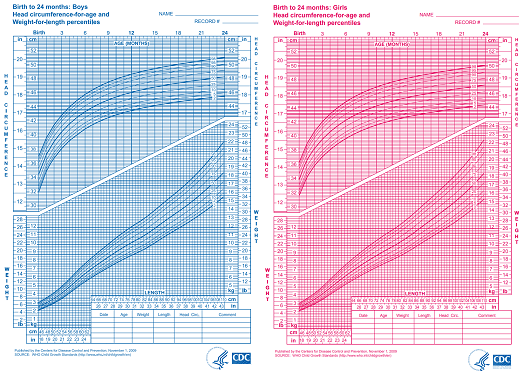
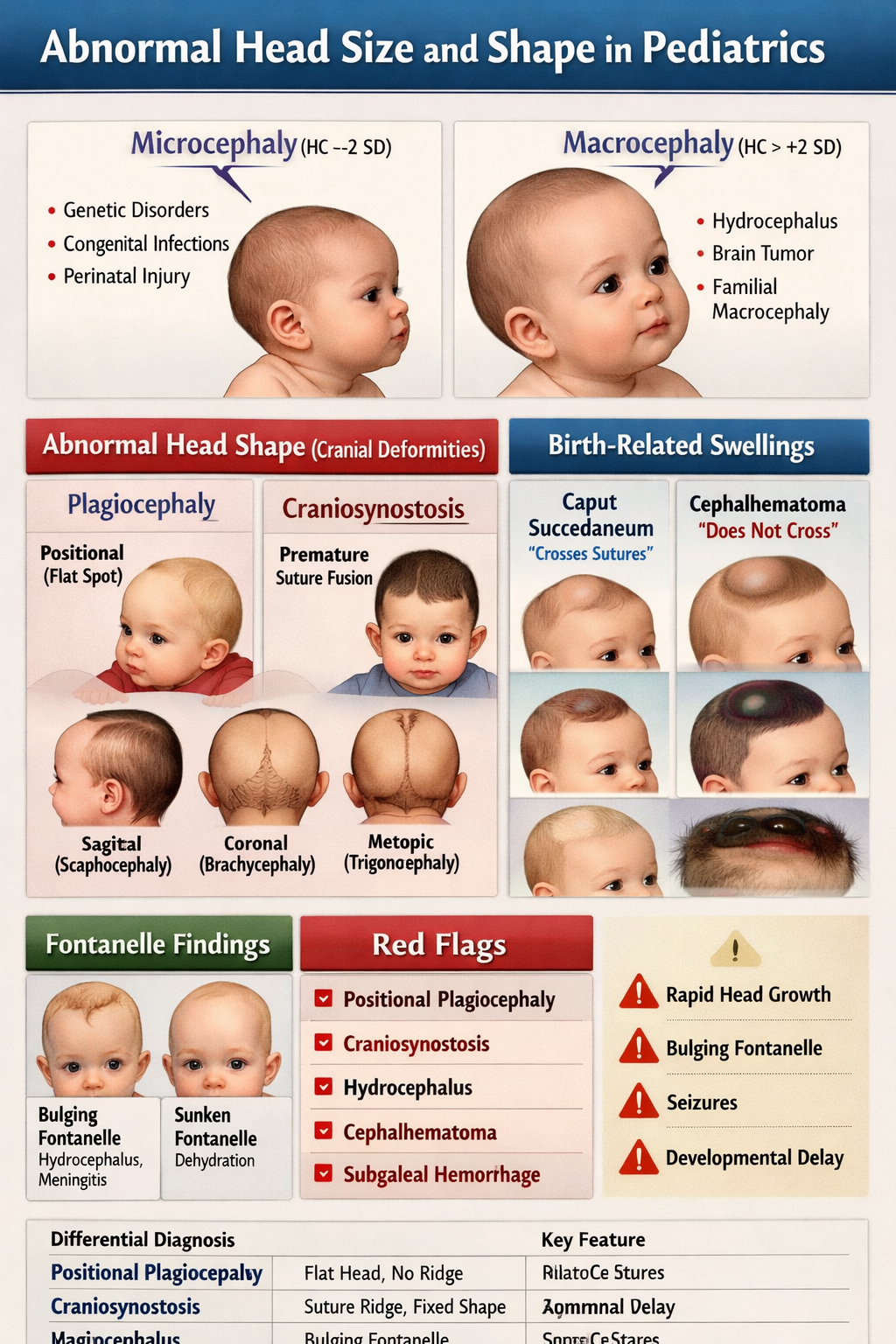
Head Circumference
- Birth: 35 cm
- 1 year: 47 cm
- 5 years: 50 cm
6. Developmental Screening Tools
Common tools:
- Denver Developmental Screening Test (DDST)
- Ages and Stages Questionnaire (ASQ)
- Bayley Scales of Infant Development
7. Red Flags in Development (Important)
Gross Motor
- No head control by 4 months
- Not sitting by 9 months
- Not walking by 18 months
Language
- No babbling by 9 months
- No words by 18 months
- No 2-word phrases by 2 years
Social
- No social smile by 3 months
- No pointing/gestures by 12 months
- Poor eye contact/autism concern
8. Factors Influencing Normal Development
Positive Factors
- Adequate nutrition
- Secure attachment
- Early stimulation
- Safe environment
Negative Factors
- Prematurity
- Chronic illness
- Malnutrition
- Neglect/abuse
- Genetic syndromes
9. Management of Normal Development (Pediatric Guidance)
Although normal development needs no treatment, pediatric care includes:
Promotion
- Exclusive breastfeeding 6 months
- Immunizations
- Responsive parenting
Monitoring
- Regular well-child visits
- Growth chart plotting
- Developmental screening
Early Intervention if Delay Detected
- Speech therapy
- Physiotherapy
- Occupational therapy
- Special education support
10. Parent Counselling Points
Parents should be advised:
- Every child develops at a slightly different pace
- Milestones follow sequence, not exact age
- Provide play, talking, reading daily
- Avoid excessive screen time (<2 years none)
- Seek evaluation early if red flags present