Normal Newborn (Neonate)
Definition
A normal newborn (neonate) refers to a healthy infant from birth to 28 days of life who shows normal physiological adaptation to extra-uterine life without congenital abnormalities or illness.
1. Birth Criteria for a Normal Newborn
A newborn is considered normal when the following are present:
| Parameter | Normal Range |
| ------------------- | --------------------------- |
| Gestational age | 37–42 weeks (term baby) |
| Birth weight | 2.5–4 kg |
| Length | 48–52 cm |
| Head circumference | 33–35 cm |
| Chest circumference | 30–33 cm |
| Apgar score | 7–10 at 1 and 5 minutes |
2. Apgar Score (Assessment at Birth)
Assessed at 1 minute and 5 minutes after birth
| Parameter | Score 0 | Score 1 | Score 2 |
| ------------------- | ----------- | -------------------------- | --------------- |
| Heart rate | Absent | <100/min | >100/min |
| Respiration | Absent | Slow/irregular | Good cry |
| Muscle tone | Limp | Some flexion | Active movement |
| Reflex irritability | No response | Grimace | Cry |
| Color | Blue/pale | Body pink extremities blue | Completely pink |
Interpretation
| Score | Meaning |
| ----- | ----------------- |
| 7–10 | Normal |
| 4–6 | Moderate distress |
| 0–3 | Severe distress |
3. Vital Signs of a Normal Newborn
| Parameter | Normal Range |
| ---------------- | ---------------------- |
| Temperature | 36.5–37.5°C |
| Heart rate | 120–160/min |
| Respiratory rate | 40–60/min |
| Blood pressure | 60–80 / 40–50 mmHg |
4. General Physical Characteristics
Skin
- Pink or reddish color
- Vernix caseosa (white cheesy substance) present
- Lanugo hair may be present on shoulders/back
- Milia (tiny white cysts on face) common
- Physiological jaundice may appear after 24 hours
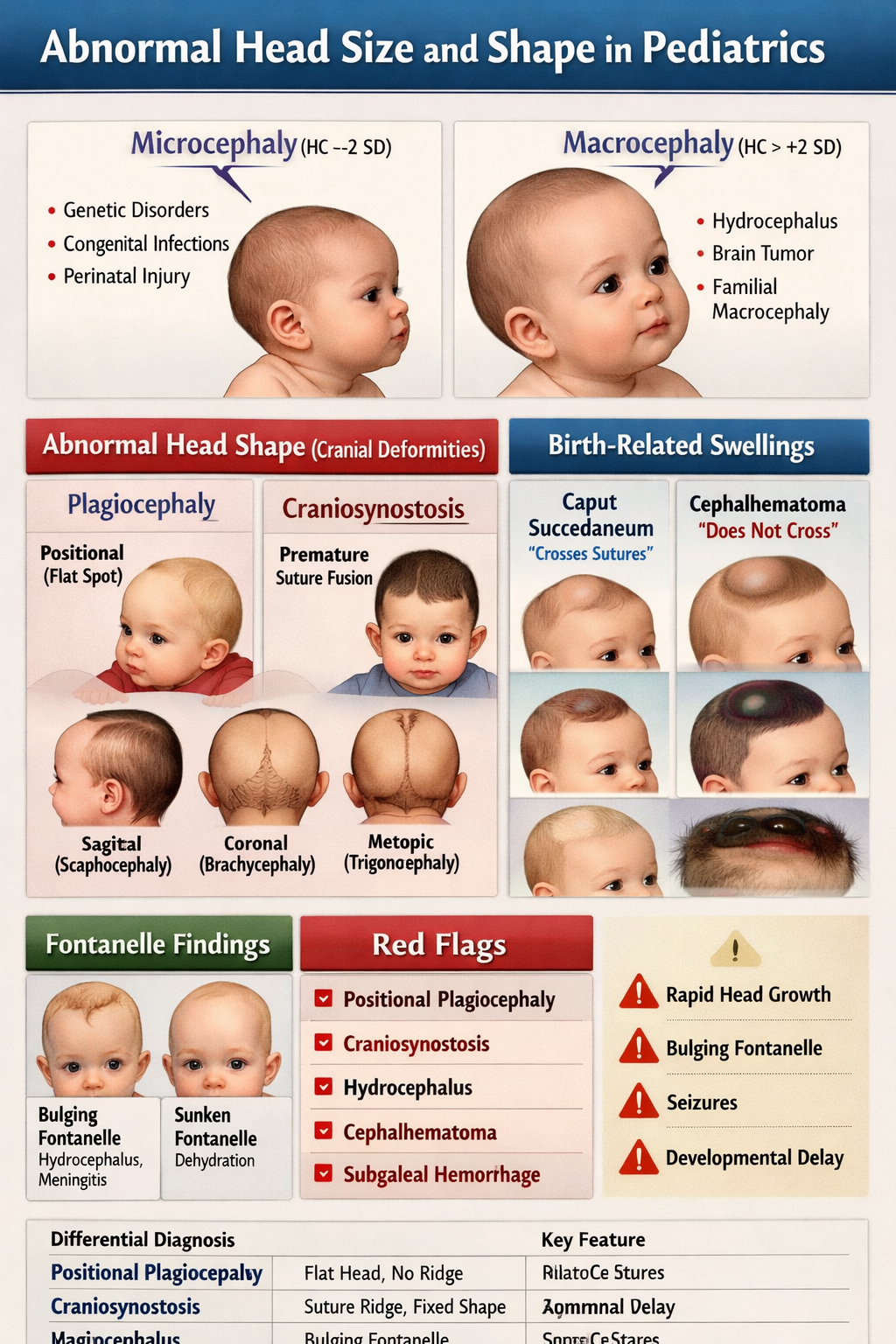
Head
- Large compared to body
- Fontanelles present
| Fontanelle | Closure Time |
| ---------- | ------------ |
| Anterior | 12–18 months |
| Posterior | 6–8 weeks |
- Moulding may be present after vaginal delivery
Eyes
- Usually closed initially
- Red reflex present
- Transient strabismus may occur
Nose
- Newborns are obligate nasal breathers
Mouth
- Strong sucking reflex
- Epstein pearls may be present
Neck
- Short and thick
5. Chest
- Shape: Circular
- Chest and abdomen move together during breathing
- Heart sounds normally heard at 4th intercostal space
6. Abdomen
- Soft and slightly protuberant
- Umbilical cord contains:
* 2 umbilical arteries
* 1 umbilical vein
Umbilical stump falls off in 7–10 days
7. Genitalia
Male
- Testes usually descended
- Scrotal rugae present
Female
- Labia majora cover labia minora
- Vaginal discharge or mild bleeding may occur due to maternal hormones
8. Neurological Reflexes (Primitive Reflexes)
| Reflex | Response | Disappears |
| --------------- | ------------------------ | ----------- |
| Rooting reflex | Turns head toward touch | 4 months |
| Sucking reflex | Sucks when nipple placed | 4 months |
| Moro reflex | Startle reflex | 4–6 months |
| Palmar grasp | Grasps finger | 5–6 months |
| Plantar grasp | Toe flexion | 9–12 months |
| Babinski reflex | Toes fan out | 1 year |
| Stepping reflex | Walking movement | 2 months |
9. Normal Physiological Changes After Birth
Weight
- Loss of 5–10% body weight in first week
- Regained by 10–14 days
Urination
- First urine within 24 hours
Meconium
- Passed within 24–48 hours
Stool
- Changes from meconium → transitional stool → milk stool
10. Feeding
Preferred feeding: Exclusive breastfeeding
| Feature | Detail |
| ---------- | ----------------------------- |
| First feed | Within 1 hour of birth |
| Frequency | 8–12 feeds/day |
| Colostrum | First milk rich in antibodies |
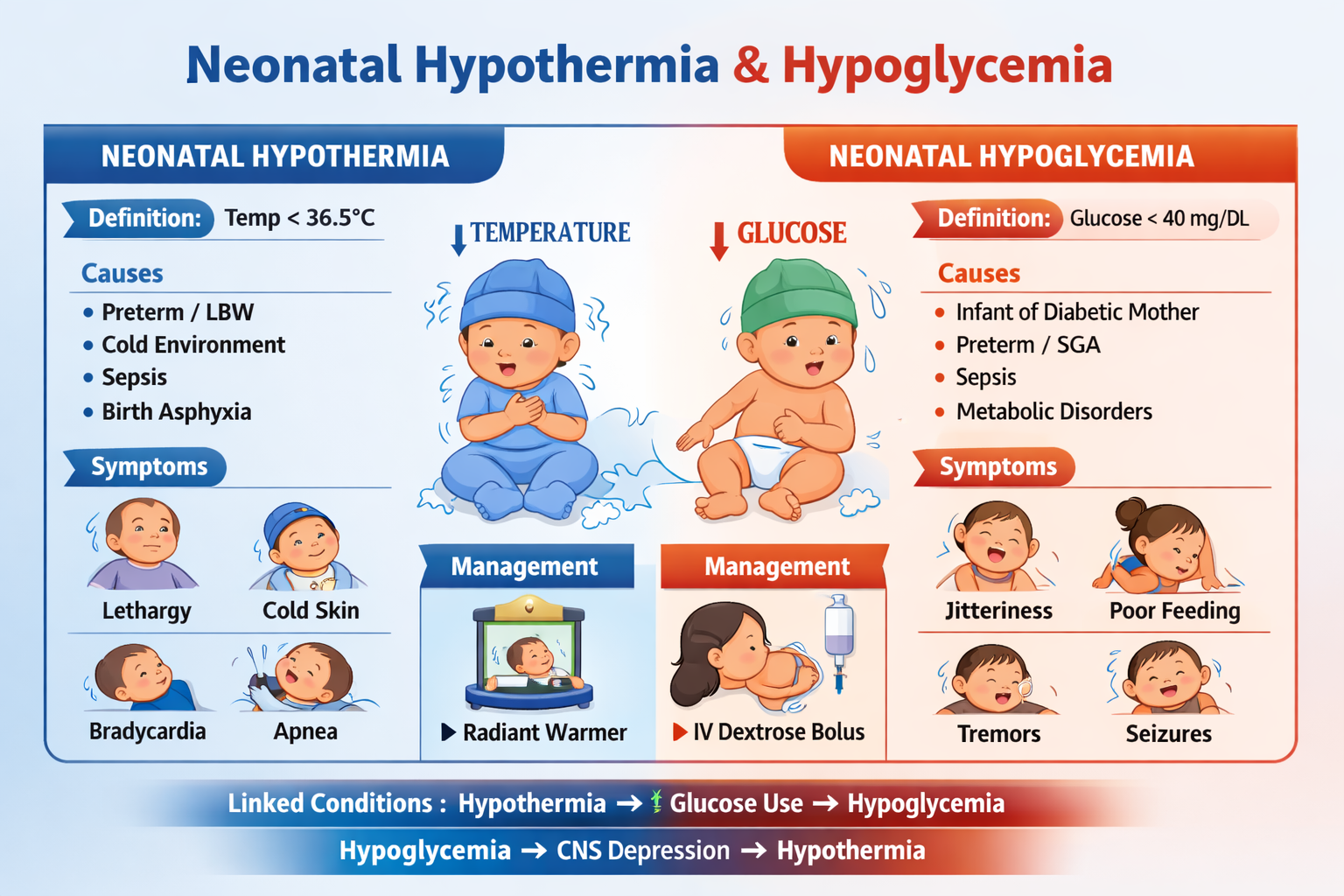
11. Thermoregulation
Newborns lose heat by:
- Conduction
- Convection
- Radiation
- Evaporation
Prevention:
- Dry immediately after birth
- Skin-to-skin contact
- Proper wrapping
12. Routine Care of a Normal Newborn
Immediate Care
- Clear airway
- Dry and warm baby
- Cord clamping
- Apgar assessment
Essential Newborn Care
- Breastfeeding initiation
- Eye care (antibiotic drops in some settings)
- Vitamin K injection
Medication
Vitamin K
Indication
Prevention of Vitamin K Deficiency Bleeding (VKDB)
Dose
- Term baby: 1 mg IM single dose
- Preterm: 0.5 mg IM
Mechanism
Promotes synthesis of clotting factors II, VII, IX, X
13. Screening Tests in Newborn
Common newborn screening includes:
- Congenital hypothyroidism
- Phenylketonuria
- G6PD deficiency
- Hearing screening
- Pulse oximetry for congenital heart disease
14. Danger Signs in Newborn
Immediate medical attention required if:
- Poor feeding
- Fever or hypothermia
- Respiratory distress
- Convulsions
- Persistent vomiting
- Cyanosis
- Jaundice within 24 hours
- Lethargy
✔ Summary
A normal newborn is a healthy term infant with:
- Birth weight 2.5–4 kg
- Heart rate 120–160/min
- Respiratory rate 40–60/min
- Strong primitive reflexes
- Initiation of breastfeeding early
- Passage of urine and meconium within the first 24 hours.
If you want, I can also give a very short exam-oriented MBBS pediatric answer (perfect for theory exam writing) or high-yield MCQs on normal newborn.