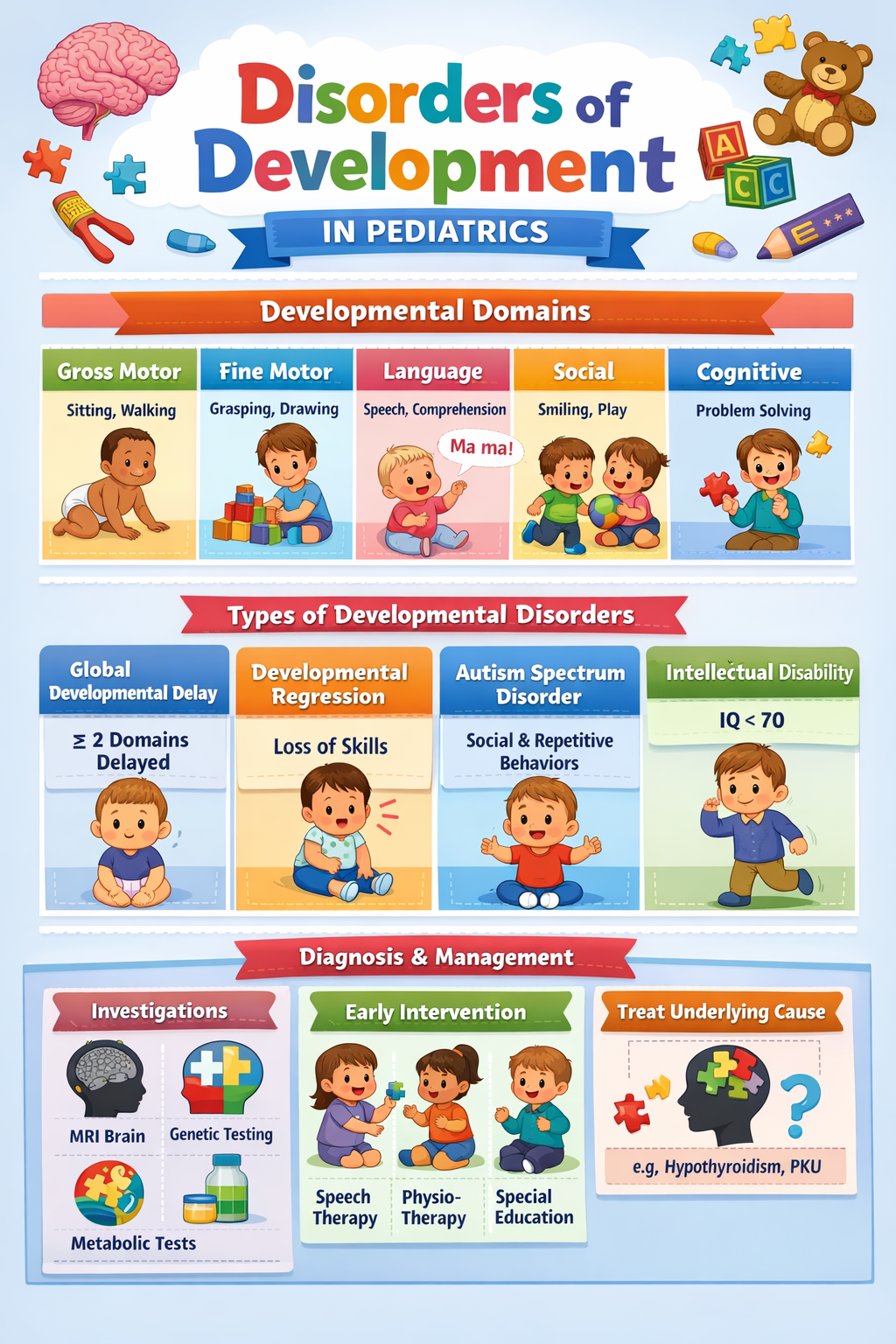
Disorders of Development (Pediatrics)
Developmental disorders refer to conditions in which a child fails to achieve expected developmental milestones in one or more domains. They result from disturbances in brain growth, genetic factors, environmental influences, or systemic diseases.
Development is assessed in four domains:
- Gross motor
- Fine motor and adaptive
- Language and hearing
- Personal–social development
When delay occurs, it may affect one domain (specific delay) or multiple domains (global delay).
1. Global Developmental Delay (GDD)
Definition
Significant delay in two or more developmental domains in children younger than 5 years.
Pathophysiology
- Abnormal brain development or injury leading to impaired neural connections.
- Causes include genetic defects, metabolic disorders, hypoxic brain injury, infections, and environmental deprivation.
Causes
Prenatal
- Chromosomal abnormalities (e.g., Down Syndrome)
- Congenital infections (TORCH)
- Maternal drug exposure
- Malnutrition
Perinatal
- Birth asphyxia
- Prematurity
- Intracranial hemorrhage
Postnatal
- CNS infections
- Trauma
- Severe malnutrition
- Environmental deprivation
Clinical Features
- Delay in sitting, standing, walking
- Speech delay
- Poor social interaction
- Cognitive impairment
- Hypotonia or abnormal muscle tone
- Seizures in some cases
Investigations
- Developmental screening tests
- IQ assessment (after 5 years)
- Genetic testing (karyotype)
- Neuroimaging (MRI brain)
- Metabolic screening
- Hearing and vision testing
Management
- Early identification
- Early stimulation programs
- Physiotherapy
- Speech therapy
- Occupational therapy
- Treatment of underlying cause
- Special education support
2. Specific Developmental Delay
Delay occurs in only one developmental domain.
Types
A. Language Delay
Delay in speech or understanding language.
Causes
- Hearing impairment
- Autism
- Intellectual disability
- Environmental deprivation
Clinical Features
- No babbling by 12 months
- No words by 18 months
- Poor comprehension
- Limited vocabulary
Management
- Hearing evaluation
- Speech therapy
- Parent training
B. Motor Development Delay
Delay in gross or fine motor milestones.
Causes
- Cerebral Palsy
- Muscular dystrophy
- Hypotonia disorders
- Malnutrition
Clinical Features
- Delayed sitting or walking
- Poor coordination
- Abnormal muscle tone
- Persistent primitive reflexes
Management
- Physiotherapy
- Occupational therapy
- Orthopedic support
3. Autism Spectrum Disorder (ASD)
Definition
A neurodevelopmental disorder characterized by impaired social communication and restricted repetitive behavior.
Pathophysiology
- Abnormal neural connectivity
- Genetic mutations affecting synapse development
- Imbalance in neurotransmitters such as serotonin
Clinical Features
Social impairment
- Poor eye contact
- Lack of social smile
- Does not respond to name
Communication impairment
- Delayed speech
- Echolalia
- Difficulty understanding emotions
Repetitive behavior
- Hand flapping
- Rocking
- Obsessive routines
Diagnosis
Clinical diagnosis based on DSM criteria.
Screening tools:
- M-CHAT
- ADOS
Management
- Behavioral therapy
- Applied behavior analysis (ABA)
- Speech therapy
- Occupational therapy
- Parent counseling
No definitive cure but early therapy improves outcomes.
4. Attention Deficit Hyperactivity Disorder (ADHD)
Definition
A neurodevelopmental disorder characterized by inattention, hyperactivity, and impulsivity.
Pathophysiology
- Dysfunction of dopamine and norepinephrine pathways in the prefrontal cortex.
Clinical Features
Inattention
- Poor concentration
- Forgetfulness
- Difficulty completing tasks
Hyperactivity
- Excessive talking
- Constant movement
- Fidgeting
Impulsivity
- Interrupting others
- Acting without thinking
Diagnosis
Symptoms present:
- Before age 12
- In multiple settings (school and home)
Management
Behavioral therapy
- Parent training
- Classroom management
Medications
Methylphenidate
- Mechanism: blocks dopamine reuptake
- Dose: 0.3–1 mg/kg/day divided doses
- Adverse effects: insomnia, appetite loss, tachycardia
- Monitoring: weight, BP, heart rate
Other drugs
- Atomoxetine
- Amphetamines
5. Intellectual Disability (ID)
Definition
Significant limitations in intellectual functioning and adaptive behavior with onset before age 18.
Diagnostic Criteria
- IQ < 70
- Deficits in adaptive functioning
- Onset during developmental period
Causes
- Genetic disorders (e.g., Fragile X Syndrome)
- Metabolic diseases
- Birth injury
- Infections
- Environmental deprivation
Clinical Features
- Poor learning ability
- Delayed milestones
- Difficulty in daily living skills
- Poor social adaptation
Classification
| IQ | Severity |
| ----- | -------- |
| 50–70 | Mild |
| 35–49 | Moderate |
| 20–34 | Severe |
| <20 | Profound |
Management
- Special education
- Behavioral therapy
- Occupational therapy
- Social support
6. Learning Disorders
Specific impairment in academic skills despite normal intelligence.
Types
- Dyslexia (reading difficulty)
- Dysgraphia (writing difficulty)
- Dyscalculia (math difficulty)
Causes
- Neurodevelopmental differences in language processing centers.
Clinical Features
- Poor school performance
- Difficulty reading or writing
- Slow learning
Management
- Specialized teaching
- Educational therapy
- Individualized learning plans
7. Developmental Coordination Disorder
Definition
Poor motor coordination affecting daily activities.
Features
- Clumsiness
- Difficulty writing
- Poor balance
Management
- Occupational therapy
- Motor skill training
Red Flag Signs of Developmental Disorders
- No social smile by 2 months
- No head control by 4 months
- No sitting by 9 months
- No walking by 18 months
- No meaningful words by 18 months
- Loss of previously acquired milestones
These require immediate developmental evaluation.
✅ Summary
Developmental disorders include:
- Global developmental delay
- Specific developmental delay
- Autism spectrum disorder
- ADHD
- Intellectual disability
- Learning disorders
- Developmental coordination disorder
Early diagnosis and intervention significantly improve outcomes.
If you want, I can also give:
- Complete classification of developmental disorders (exam oriented)
- Developmental milestone delays and their causes
- 50 MCQs on developmental disorders for pediatrics exams.