Behavioral Disorders in Children
1. Definition
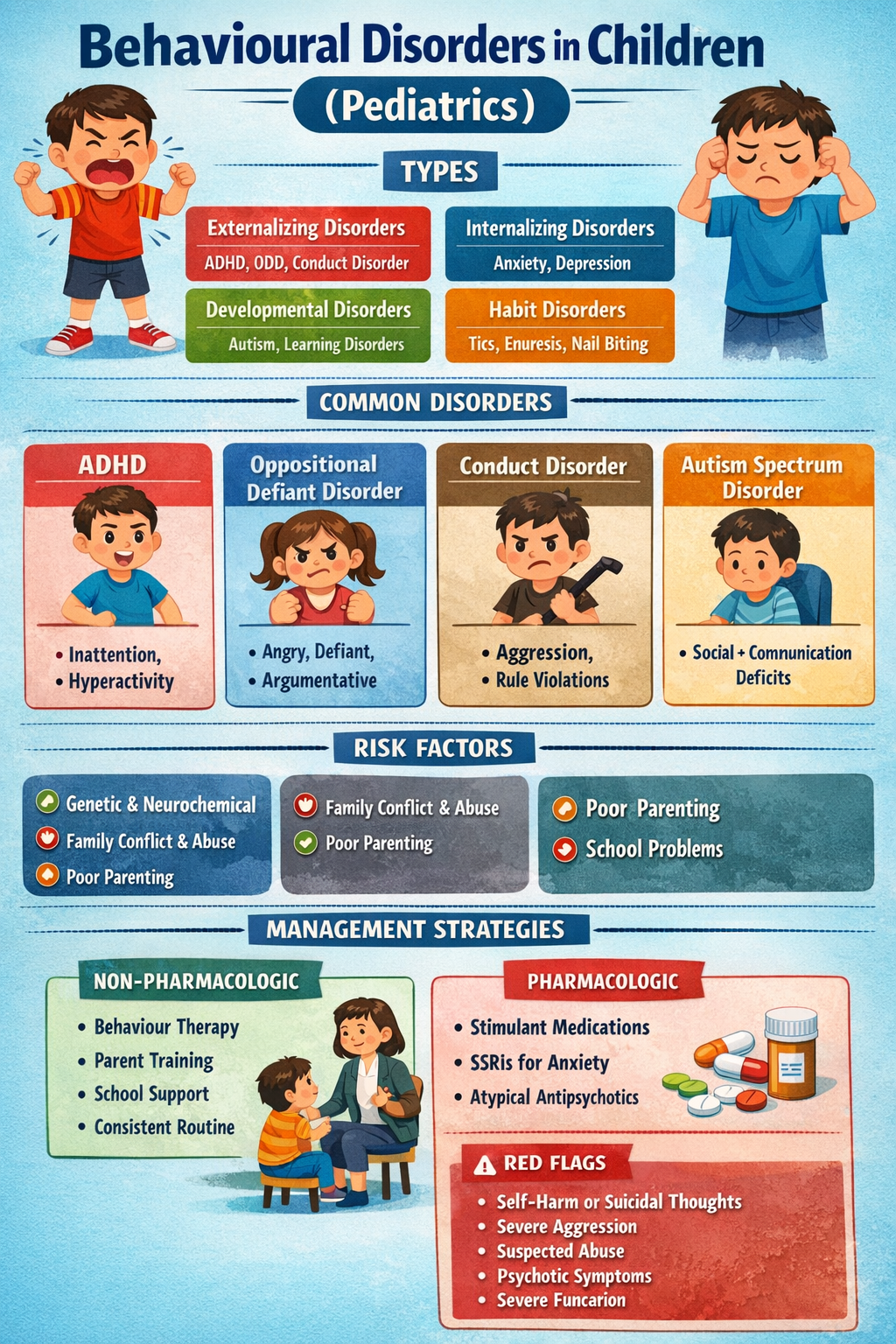
Behavioral disorders in children are conditions characterized by persistent patterns of disruptive, oppositional, aggressive, impulsive, or socially inappropriate behaviors that are significantly different from age-appropriate behavior and cause impairment in social, academic, or family functioning.
They usually begin in early childhood or adolescence and may continue into adulthood if untreated.
Major Types of Behavioral Disorders in Children
1. Attention-Deficit/Hyperactivity Disorder (ADHD)
Definition
A neurodevelopmental disorder characterized by inattention, hyperactivity, and impulsivity that interferes with functioning.
Pathophysiology
- Dysregulation of dopamine and norepinephrine pathways in the prefrontal cortex
- Reduced activity in:
* Prefrontal cortex
* Basal ganglia
* Cerebellum
Causes / Risk Factors
- Genetic predisposition
- Prematurity
- Low birth weight
- Prenatal alcohol exposure
- Lead exposure
- Family stress
Clinical Features
Inattention
- Difficulty sustaining attention
- Careless mistakes
- Easily distracted
- Forgetfulness
- Poor organization
Hyperactivity
- Fidgeting
- Running/climbing excessively
- Unable to sit still
- Excessive talking
Impulsivity
- Interrupting others
- Difficulty waiting turn
- Acting without thinking
Diagnosis
DSM-5 criteria:
- ≥6 symptoms for ≥6 months
- Present in ≥2 settings (home, school)
- Onset before 12 years
Investigations:
- Clinical assessment
- Teacher and parent rating scales
- Psychological evaluation
Management
Non-Pharmacologic
- Behavioral therapy
- Parent training
- Classroom modification
- Cognitive behavioral therapy
Pharmacologic
##### 1. Methylphenidate
Indication: First-line treatment
Mechanism
- Blocks dopamine and norepinephrine reuptake
Dose
Children:
0.3 mg/kg/dose twice daily
Maximum: ~60 mg/day
Adverse Effects
- Loss of appetite
- Insomnia
- Tachycardia
- Growth suppression
Contraindications
- Severe anxiety
- Glaucoma
- Cardiac disease
Monitoring
- Weight
- Blood pressure
- Behavior
##### 2. Atomoxetine
Mechanism
Selective norepinephrine reuptake inhibitor
Dose
0.5–1.2 mg/kg/day
Adverse Effects
- GI upset
- Fatigue
- Liver toxicity (rare)
2. Oppositional Defiant Disorder (ODD)
Definition
A pattern of angry, argumentative, and defiant behavior toward authority figures lasting ≥6 months.
Pathophysiology
- Emotional regulation problems
- Dysfunction of limbic system and frontal cortex
Causes
- Harsh parenting
- Family conflict
- ADHD comorbidity
- Low socioeconomic conditions
Clinical Features
- Frequent temper tantrums
- Argument with adults
- Refusing rules
- Deliberately annoying others
- Blaming others for mistakes
- Angry or resentful attitude
Diagnosis
DSM-5 criteria:
- ≥4 symptoms for ≥6 months
Management
Behavioral therapy
- Parent-management training
- Family therapy
- School counseling
Medication (if comorbid ADHD or aggression)
- Stimulants
- Antipsychotics
##### Risperidone
Mechanism
Dopamine D2 receptor blockade
Dose
0.25–1 mg/day in children
Adverse Effects
- Weight gain
- Sedation
- Hyperprolactinemia
3. Conduct Disorder (CD)
Definition
A severe behavioral disorder involving persistent violation of social rules and rights of others.
Pathophysiology
- Reduced activity in prefrontal cortex
- Poor impulse control
Causes
- Childhood abuse
- Poor parental supervision
- Antisocial family environment
- Genetic factors
Clinical Features
Four major categories:
Aggression
- Bullying
- Fighting
- Cruelty to animals
Property destruction
- Arson
- Vandalism
Deceitfulness
- Lying
- Theft
Serious rule violations
- Truancy
- Running away
- Staying out at night
Diagnosis
Symptoms present for ≥12 months
Management
- Cognitive behavioral therapy
- Family therapy
- Social skills training
Medication (for aggression):
- Risperidone
- Mood stabilizers
4. Autism Spectrum Disorder (ASD)
Definition
A neurodevelopmental disorder characterized by social communication deficits and restricted repetitive behaviors.
Pathophysiology
- Abnormal brain connectivity
- Genetic mutations affecting synaptic development
Causes
- Genetic factors
- Advanced parental age
- Prenatal infections
Clinical Features
Social deficits
- Poor eye contact
- Lack of social reciprocity
- Delayed speech
Repetitive behavior
- Hand flapping
- Rocking
- Insistence on routines
Diagnosis
- Clinical assessment
- Developmental screening
- Autism diagnostic tools
Management
Non-pharmacologic:
- Applied behavior analysis (ABA)
- Speech therapy
- Occupational therapy
Medication for symptoms:
- Risperidone
- Aripiprazole
5. Anxiety Disorders in Children
Types
- Separation anxiety disorder
- Social anxiety
- Generalized anxiety disorder
Clinical Features
- Excessive worry
- School refusal
- Physical symptoms (headache, stomach pain)
Treatment
Cognitive Behavioral Therapy
Medication:
##### Fluoxetine
Mechanism
Selective serotonin reuptake inhibitor (SSRI)
Dose
10–20 mg/day
Adverse Effects
- Nausea
- Sleep disturbance
- Behavioral activation
Complications of Behavioral Disorders
- Academic failure
- Substance abuse
- Depression
- Social isolation
- Criminal behavior in adulthood
Prevention
- Early childhood intervention
- Positive parenting
- Early diagnosis
- School counseling
Prognosis
- Early treatment improves outcomes
- Untreated disorders may persist into adulthood
If you want, I can also provide:
• DSM-5 diagnostic criteria table for all behavioral disorders
• Comparison table: ADHD vs ODD vs Conduct Disorder
• 50 MCQs for exam preparation
• Behavioral disorders flowchart for quick revision.