✅ Behavioural Disorders in Children (Pediatrics) — Complete Detailed Guide
1. Definition
Behavioural disorders are conditions in which a child shows persistent, maladaptive, disruptive, or inappropriate behaviours that interfere with:
- Family life
- School performance
- Peer relationships
- Social development
These behaviours are more severe, frequent, and persistent than normal childhood misbehaviour.
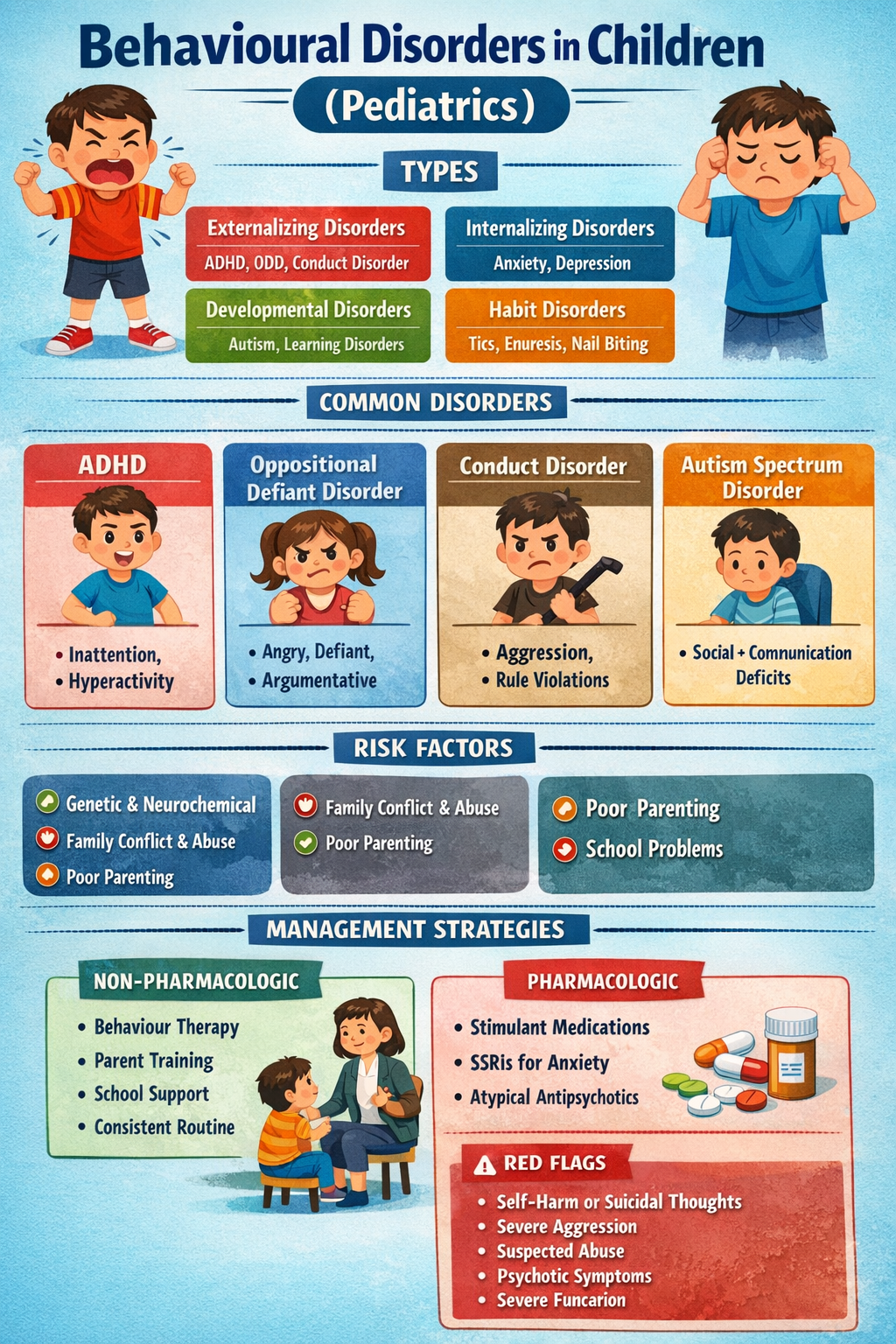
2. Classification (Major Types)
Behavioural disorders in children are commonly classified into:
A. Externalizing Disorders (Disruptive behaviours)
- Attention-Deficit Hyperactivity Disorder (ADHD)
- Oppositional Defiant Disorder (ODD)
- Conduct Disorder (CD)
B. Internalizing Disorders (Emotional behaviours)
- Anxiety disorders
- Depression
- Somatic symptom disorders
C. Developmental & Neurobehavioral Disorders
- Autism Spectrum Disorder (ASD)
- Learning disorders
- Intellectual disability
D. Habit Disorders
- Thumb sucking
- Nail biting
- Tics
- Enuresis/Encopresis
3. Etiology and Risk Factors
Behavioural disorders are multifactorial.
Biological Factors
- Genetic predisposition
- Neurochemical imbalance (dopamine, serotonin)
- Brain development abnormalities
- Prenatal exposure: alcohol, drugs
Psychological Factors
- Poor emotional regulation
- Low frustration tolerance
- Insecure attachment
Family and Social Factors
- Parenting inconsistency
- Harsh punishment
- Domestic violence
- Neglect or abuse
- Poor socioeconomic environment
School Factors
- Bullying
- Learning difficulties
- Poor teacher-child relationship
4. Common Behavioural Disorders (Detailed)
A. Attention-Deficit Hyperactivity Disorder (ADHD)
Definition
A neurodevelopmental disorder characterized by:
- Inattention
- Hyperactivity
- Impulsivity
Present before age 12 and impair functioning.
Types
- Predominantly inattentive
- Predominantly hyperactive-impulsive
- Combined type
Clinical Features
Inattention
- Easily distracted
- Poor concentration
- Forgetful, loses things
- Difficulty completing tasks
Hyperactivity
- Fidgeting
- Cannot sit still
- Runs/climbs excessively
Impulsivity
- Interrupts others
- Difficulty waiting turn
- Acts without thinking
Diagnosis
- DSM-5 criteria (≥6 symptoms for ≥6 months)
- Symptoms in ≥2 settings (home + school)
- Vanderbilt rating scale
Management
Non-pharmacologic (First line)
- Parent training programs
- Behaviour therapy
- Classroom modifications
- Structured routine
Pharmacologic Treatment
1. Methylphenidate (Stimulant)
- Dose: 0.3–1 mg/kg/day (start low)
- MOA: Increases dopamine/norepinephrine
- Side effects: appetite loss, insomnia, tachycardia
- Monitoring: weight, BP, growth
2. Atomoxetine (Non-stimulant)
- Dose: 0.5–1.4 mg/kg/day
- Useful if tics/anxiety present
B. Oppositional Defiant Disorder (ODD)
Definition
Persistent pattern of:
- Angry mood
- Argumentative behaviour
- Defiance toward authority
Duration ≥6 months.
Clinical Features
- Frequent temper tantrums
- Refuses to obey rules
- Blames others
- Vindictive behaviour
Management
- Parent-child interaction therapy
- Positive reinforcement
- Family counselling
⚠ Medication not primary unless comorbid ADHD.
C. Conduct Disorder (CD)
Definition
Severe behavioural disorder with violation of:
- Social norms
- Rights of others
Features
- Aggression to people/animals
- Bullying, fighting
- Stealing, lying
- Vandalism
- Truancy, running away
Prognosis
High risk of adult antisocial personality disorder.
Management
- Multisystem therapy
- School-based interventions
- Treatment of comorbid ADHD
- Family therapy
D. Autism Spectrum Disorder (ASD)
Core Deficits
- Social communication impairment
- Restricted repetitive behaviours
Features
- Poor eye contact
- Delayed speech
- Repetitive movements
- Sensory sensitivity
Management
- Early behavioural intervention (ABA)
- Speech therapy
- Occupational therapy
E. Anxiety Disorders in Children
Common Presentations
- Separation anxiety
- School refusal
- Excessive fear/worry
Management
- Cognitive Behavioural Therapy (CBT)
- SSRIs if severe
F. Habit Disorders
Examples
- Thumb sucking (normal <4 years)
- Nail biting
- Head banging
- Tics
Management
- Ignore mild habits
- Habit reversal therapy
- Address stressors
G. Enuresis and Encopresis
Enuresis
Bedwetting after age 5.
Management
- Behavioural alarm therapy
- Desmopressin if needed
Encopresis
Fecal soiling after age 4.
Management
- Treat constipation
- Toilet training + counselling
5. Assessment Approach in Pediatrics
History
- Onset and duration
- Home vs school behaviour
- Parenting style
- Stressors (divorce, abuse)
- Developmental milestones
Examination
- Growth parameters
- Neurological exam
- Signs of neglect/abuse
Screening Tools
- Conners scale (ADHD)
- Vanderbilt scale
- Child Behaviour Checklist (CBCL)
6. Differential Diagnosis
Behavioural symptoms may mimic:
- Intellectual disability
- Learning disorders
- Hearing impairment
- Depression/anxiety
- Seizure disorders
- Thyroid dysfunction
- Abuse/trauma
7. General Principles of Management
Non-Pharmacologic (Most Important)
- Behaviour modification therapy
- Parent management training
- Consistent discipline
- Positive reinforcement
- Structured routines
- School support
Pharmacologic (Only when indicated)
- ADHD: stimulants
- Severe aggression: atypical antipsychotics (specialist)
- Anxiety/depression: SSRIs
8. Prevention and Counselling
Parents should be advised:
- Maintain consistent parenting
- Avoid harsh punishment
- Encourage emotional expression
- Limit screen time
- Ensure adequate sleep
- Promote healthy peer interaction
9. Red Flags Requiring Urgent Referral
Immediate child psychiatry referral if:
- Self-harm or suicidal ideation
- Severe aggression
- Suspicion of abuse
- Psychotic symptoms
- Severe functional impairment
✅ Summary Table
| Disorder | Key Feature | Main Treatment |
| ---------------- | ------------------------------ | ------------------------------ |
| ADHD | Inattention + hyperactivity | Behaviour therapy + stimulants |
| ODD | Defiant, argumentative | Parent training |
| Conduct Disorder | Aggression + rule violation | Multisystem therapy |
| Autism | Social + repetitive behaviours | Early intervention |
| Anxiety | Excessive fear, school refusal | CBT ± SSRIs |
| Habit disorders | Thumb sucking, tics | Habit reversal |
| Enuresis | Bedwetting >5 yrs | Alarm therapy |